

Wine aficionados spend an inordinate amount of time waiting for a wine to become fully mature. Perhaps they should also consider whether they are “mature” enough to appreciate a wine.
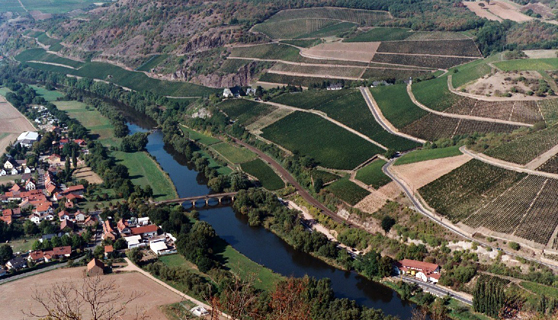
Consider Corton. Or more properly, Le Corton, a Grand Cru wine from the famous Hill of Corton in Burgundy. It is the wine of legend, highly prized by all, enjoying both stratospheric prices and worldwide encomium from wine critics and consumers. If there are wine superstars, Le Corton is one of them.
And yet… And yet…
With all my experience in and appreciation of wine, and especially my love of great Bourgogne wines, Le Corton somehow never figured all that prominently in either my consumption or my adulation.
There are few Burgundian wines I did not like, and Corton certainly wasn’t in that category; it’s simply that I never seemed to be as inspired by Corton as I was by others. I could get silly over Savigny-les-Beaunes, which is usually more a cute number than a profound example of Pinot. I could thrill over a Chambertin, or one of the Romanee siblings. I could even appreciate the somewhat stodgy but consistent nature of a decent Pommard. But as much as I could appreciate what Le Corton was supposed to be, I never could truly come to appreciate it as thoroughly (and reverentially) as I thought I should.
And I never really understood why.
That is, until recently.
I was in the home of good friends in Bordeaux and with a simple dish of sous vide salmon and new potatoes, a perfect backdrop for a good Burgundian Pinot, I had my revelation with a 2006 Bouchard Pere et Fils LeCorton.
As revelations go, it was rather quiet, with no spinning wheels within wheels or arcs of lightning. The earth did not shake nor did the silverware clatter. I simply came to understand: it was not the wine that had been underperforming; it was me.
Until that moment, I did not know that the lack of appreciation for what Le Corton is was not implicit in the wine, but in my inability to properly appreciate what was there. In my (relative) youthful naiveté of sensory understanding, despite having frequent opportunities to experience and enjoy Le Corton, even some well aged prime vintages, I was not capable of understanding what the wine was supposed to be.
It was a problem of maturity. My maturity.
Suddenly, in this quiet moment with a good but relatively young version of Le Corton, there was gestalt.
With Corton, it’s not essentially the lovely aromatics, though lovely they can be. And it’s not at all the cherry-berry fruitiness laced with acidity that characterizes most Pinot and is the first thing one notices, although that is there as well. With Corton, it’s the superb density of the wine, the concentrated, earthy, mushroomy compactness of the sensory experience the wine provides, as if it goes beyond mere fruit and into a primal sort of communion with the soil.
Corton doesn’t charm, in the way a Savigny can. It doesn’t resound with vibrant fruit. It doesn’t even display its lean acidity. It’s a wine of surprising and endless depth and complexity and almost brooding strength.
That Corton was always there. It just took a while for me to mature enough to understand it.
http://violentfermentation.blogspot.com/2014/07/appreciating-corton.html
