
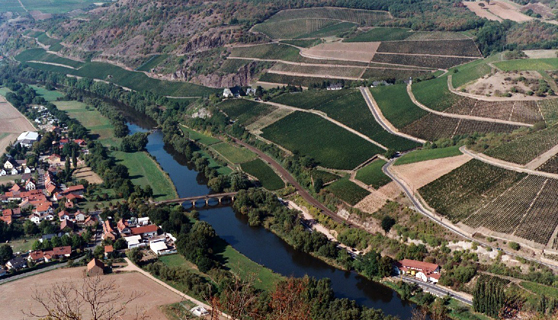

After a rather troubling visit to Casas del Bosque, we headed for our final visit of the trip, Emiliana. A lack of attentiveness early in our trip meant that I had already sampled a wine from this producer without knowing it. During the first part of our trip, at the Petrohue Lodge, I had ordered and enjoyed a Carmenere/Cabernet Sauvignon blend from Emiliana.
Nearly two weeks later it was time to get the story of the winery, and gain some insight as to why I had enjoyed that bottle earlier in our trip.
Emiliana works biodynamically for almost all of their vineyards. The few that are not are fully organic, and in transition to biodynamics. Our host toured the grounds and adjacent vineyards with us for an hour or so, explaining the holistic approach, and (because we were quite knowledgeable) details about biodynamics at Emiliana. The tour concluded with a visit to the underground cellar (an arrangement suggested to them by Nicholas Joly) where they store the (in)famous biodynamic preparations.
The crock (heh) containing preparation 506 based on dandelion flowers
Our host discussing preparation 501, based on quartz.
After the interesting and illuminating discussion we headed inside to taste the wines. As per usual, the first wine was the Novas Sauvignon Blanc (Novas is one of their ranges, a step up from their introductory Adobe range). I was fully expecting to hate the Sauvignon, but in truth I liked it. It showed a great deal of citrus and melon fruit, and none of the unpleasant green pepper elements displayed by the prior examples of SB I had tasted on the trip. There was a bit of grassiness, but it was an accent, not a focus. We moved from there to the Novas Viognier, which displayed the varietally consistent richness on the palate, as well as some lovely floral and peach elements. Well done again!
As we were talking, it was revealed that Emiliana has a small amount of Gewurztraminer planted in the Rapel Valley. Well we had to taste that! The Adobe Gewurztraminer was light, but varietally correct, and had a gentle vein of acidity running through it to keep things refreshing. Another nicely made wine. This is starting to become a trend.
On to the reds, and the Novas Pinot Noir was again well made, and not obscured by excessive oak. The Signos de Origen Pinot Noir was equally well made, a bit richer, but had the one sour note for me on this visit - a big, fat bottle that seemed totally at odds with everything else about the winery's approach. I asked about the bottle, and our host was frank enough to say that it sold better in the big bottle. Ah well. They are trying to sell wine, aren't they.
We finished with the Coyam Cabernet blend. It was another well made wine, with a deft use of oak, versus the clobbering that I had experienced elsewhere.
My overall assessment is that these are very enjoyable, drinkable wines, made with a respect for the land and the people who work for and with the winery (they have a number of programs to help their vineyard workers earn extra money, including the selling of some great hats, which sadly did not fit...). I would be more than happy to buy and drink them.
Our visit concluded, we headed for the airport to go home. We did snap a few extra photos though, as Emiliana was a beautiful spot.