
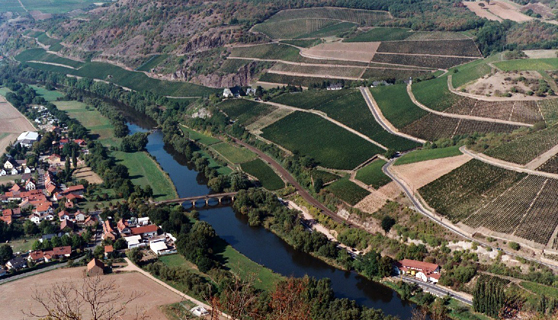

Had a great trip to Spain, and managed to hit three wine regions along the way: Priorat, Rioja and Bierzo. I’d never been to any of these regions before and don’t really a lot of wines from these areas, so it was interesting to learn more about these regions and wines.
First up was the Priorat, where I stayed at Hotel Cal Llop, a great place in a small, cute village in the centre of the region (Gratallops). It’s a beautiful region, with lots of hills and mountains backdropping new and old vineyards. It used to be filled with vineyards, but only has about 10-15% of vine coverage that it used to have. It’s a funny area, in that there aren’t really too many tourist amenities compared to most other wine regions. For example, there was only one place in the town to eat dinner (the hotel). But we had some nice visits, all of which have to be scheduled in advance and had fees. Ripoli Sans in Gratallops was my first visit, and the owner/winemaker was a great host, pouring great wines from his small winery. He had decided to only use grenache and carignan, the two traditional grapes of the region. Most other wineries added cabernet, merlot and/or syrah, much more recent additions, and frankly I think they made every wine I tasted worse! I really gravitated towards those wines made with no modern’ varietals. Very slowly, winemakers are starting to move to just using the two traditional grapes, making single vineyard wines or even making monovarietal (i.e., grenache or carignan) wines. Also had visits at Clos Mogador (medium, well known winery), Mas Sinien (very small) and Scala Dei (medium-big). All were great in their own way. I really liked the white wines here too, which don’t get a lot of press, but I thought were very interesting and tasty. Frankly, while I loved my visit and would really like to return, I’m not a huge fan of Priorat wines: as a rule, they are too big and alcohol-laced for their own good (and my taste). It’s a real struggle to produce balanced, moderate wines, and everybody said they were really trying to do so, but couldn’t really identify specific actions to meet these goals. But one common shift was to use larger barrels (300l, 500l or big foudres) to reduce the oak contact.
A very quick trip (2 days) in Rioja was next. Stayed in Logrono to partake in the tapas action there, and it was good fun to wander on Laurel Street to have a glass of wine and try a tapas or two in the many restaurants which lined the street. Only had three winery visits here. Our only tour was at Lopez de Heredia, and it lived up to my expectations. They are so traditional, and have a neat history, it was a very fun tour. They have a new tasting room even, which surprised me – very modern too! – and you could taste four or five of their wines there. Bought a couple of the Blanco Tondonia Reserva 1998, 21 Euros at the winery. Just popped into the tasting rooms at Muga and Marquis de Riscal, and they had a nice tasting flight available, without a tour. My visit to Rioja slightly warmed my interest in these wines; while they aren’t my favourite – often too much American oak for my liking – I do appreciate the style occasionally. The area around the town of Laguardia was the most scenic.
Last was Bierzo, a wine region I had little knowledge of or experience with. I stayed in a small town called Cacabelos in the centre of the region at Hotel Villa Cacabelos, a nice basic hotel. The visits here were really great, with the very friendly people really seeming to appreciate people visiting the region. Domino de Tares was a great first stop with three ranges of wines to taste through. Their Bierzo wines are best I thought, with their 100% Mencia wines quite strong. The woman there very kindly helped me make some other appointments. Martin Codat has a winery in this region now (Cuatre Pasos), and their three wines – rose, basic and old vine mencia - were really outstanding at amazing prices. The visit to Casar de Burbia was awesome. The owner/winemaker let me taste practically everything he had in the cellar, and he loved to experiment with his wines, so it made for an interesting tasting. He was harvesting wines that day as well, so I really appreciated the time he spent with me. When I mentioned I wanted to see some of the old vineyards, he invited me to visit his vineyards the next day, and he gave me a great tour of his vineyards and told me about all the recent goings on in the region. Again, I struggled with the Mencia wines, as they were really big with high alcohol levels, like Priorat, between 14.5-15.5 percent usually. The people I talked to there were also trying to dial back their wines, but were again struggling to do so.
Usually visiting a wine region gets me more interested in the wines, but was a different trip in that it didn’t really do that. I don’t drink a lot of Spanish wines, and probably won’t increase my small stash of Priorat or Rioja wines (I don’t think I had any Bierzo wines in my cellar before I brought some back with me). But it was great to learn more about and see the regions, so I’m now able to put a place to a name now, so to speak.