
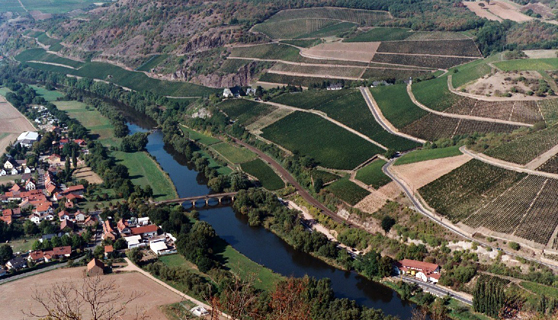

It being the kids' first time in France, we were eager to take them to all the sights and restaurants we have enjoyed. From Tours, the Fontevraud Abbey is an easy 70 kms. away by car, most of it on the motorways. We timed it so we were there at around 1pm, just in time for lunch, and, thereafter, a visit to the ancient royal abbey.
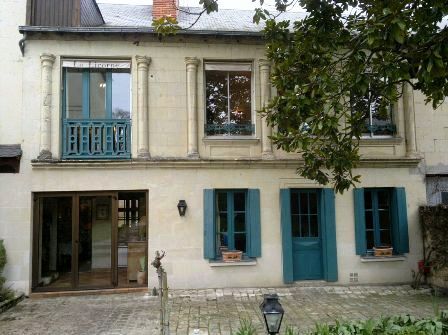
La Licorne, just as I remembered it.
We were quickly seated in its hushed, elegant downstairs area (function rooms for large parties in the second floor), took our time over the menus, ordered, and lunch began.
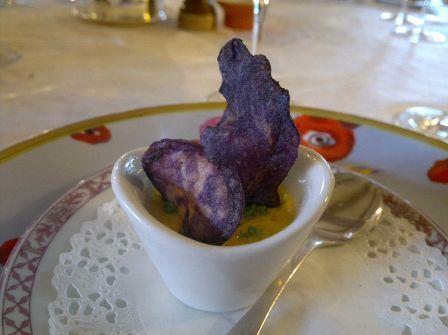
Amuse bouche
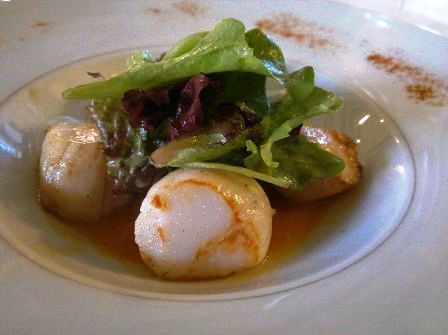
My Noix de St-Jacques (para healthy).
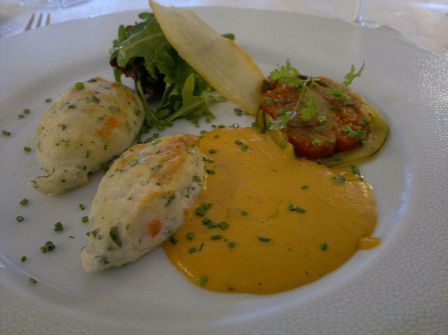
Mauro's quenelles of some fish, but I don't recall what.
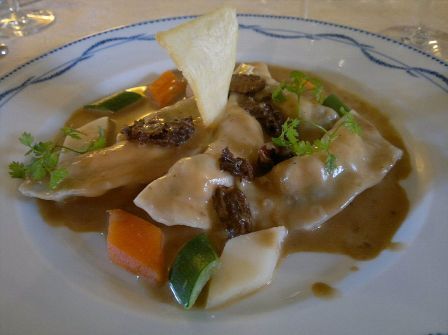
Catha and Lorenzo each ordered the hit of the meal, Raviolis de Langoustines du Guilvinec, Parfumés au Basilic, Sauce aux Morilles. Incredibly good stuff. I tasted from Catha and was so jealous. Mauro thought of getting one for himself as a second appetizer, but figured he'd wait and see how he felt after his main course.
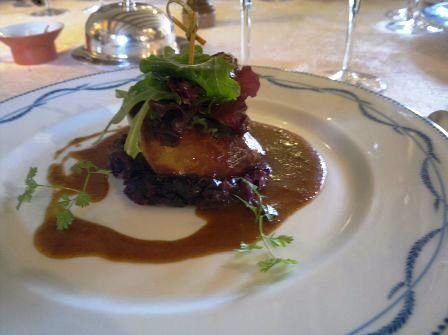
Joaqi, of course, again started with Foie Gras.
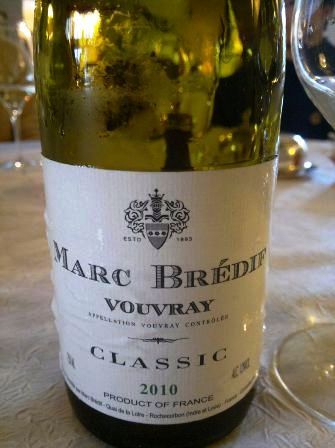
For our respective first courses, I ordered a bottle by a producer I'd never heard of: 2010 Marc Brédif Vouvray Classic - Slightly honeyed, peachy-ripe pineapple nose, some lemon, citrus. Slight minerality there too. On the palate, very suave, with notable purity and focus. The scents are joined by yellow apricot, all with an underlying cold limestone and talcum powder character. Good brightness; superior clarity. There is a slight ripe-sweetness to this, but well-balanced by fresh acidity. Very nice indeed; and it was great with my scallops.
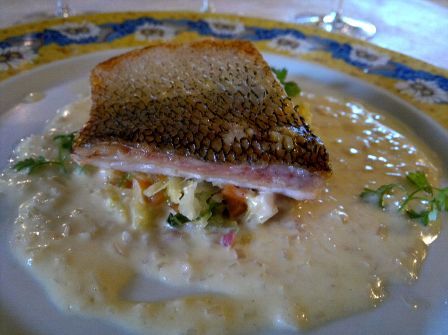
Lorenzo and I had identical main courses: Pavé de Sandre du Bassin de la Loire en Bourride de Coquillages, Parfumée au Safran d'Iran (Pavé* of Pikeperch from the Loire Basin in a Shellfish Bourride**, Scented with Iranian Saffron). With this, I continued with the above-mentioned Vouvray, which did nicely. I would have preferred a drier, racier Vouvray, but it was fine.
* "pavé" - A French culinary term referring to a square or rectangular-shaped serving of food.
** "bourride" - As used, refers to a thickened stew flavored usually by garlic, onions, orange peel, sometimes saffron, etc. Thickening is acheived by use of egg yolks and/or aïoli.
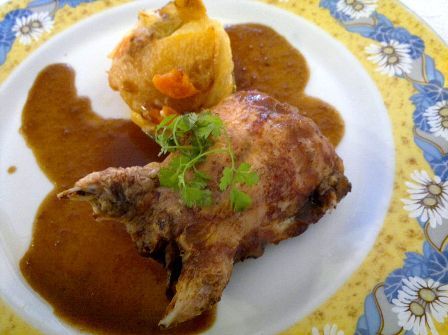
This was Roasted Quail (Caille Rôti). Mauro chose it too.
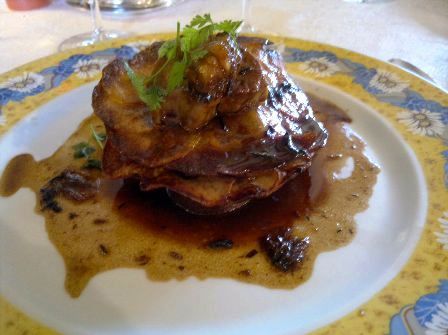
This was Joaqi's main course; but nobody remembers what it was.
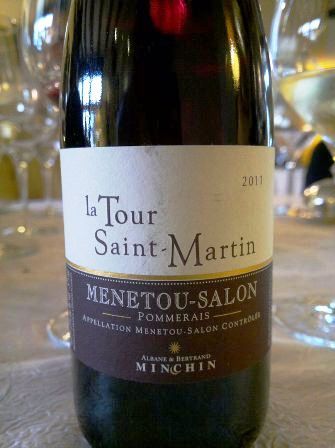
For those who ordered the game fowl, I got a bottle of this 2011 La Tour Saint-Martin Menetou-Salon - an AOC near Sancerre, eastern Loire. Concentrated, very extracted and obviously oaked (coffee, vanilla, and chocolate) pinot noir on steroids. Not really my type of pinot noir, especially during my light and fresh seafood meal.
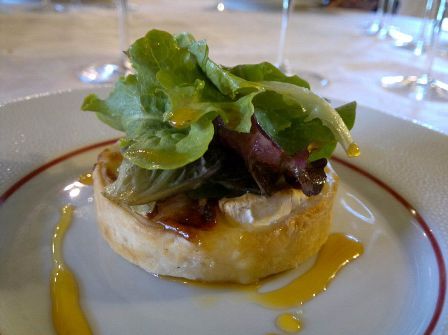
A bit of cheese before dessert.
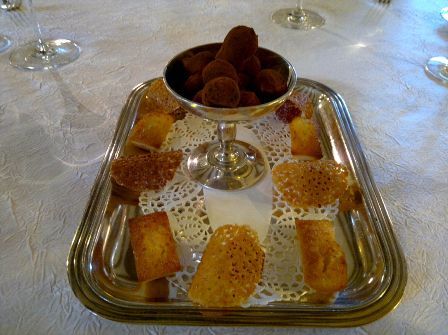
Mignardises
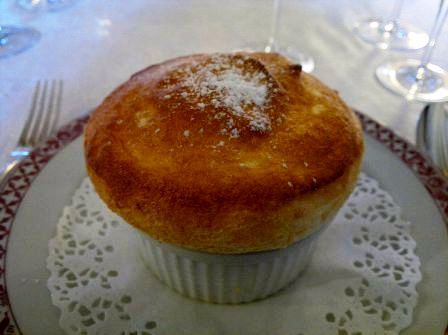
My Grand Marnier Soufflé.
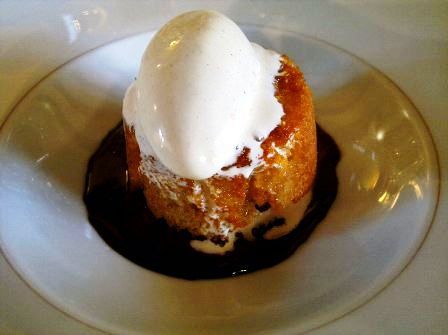
Nobody remembers what or whose this is.
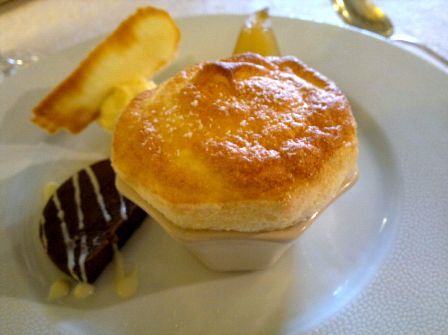
Joaqi's Dessert Sampler.
l'Abbaye de Fontevraud
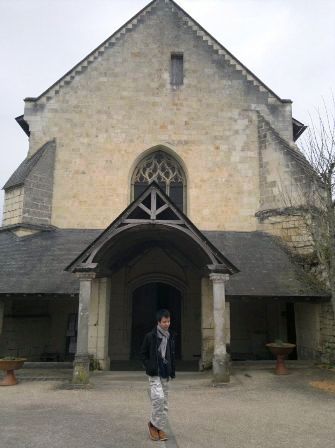
The 11th century Chapel of St. Michael.
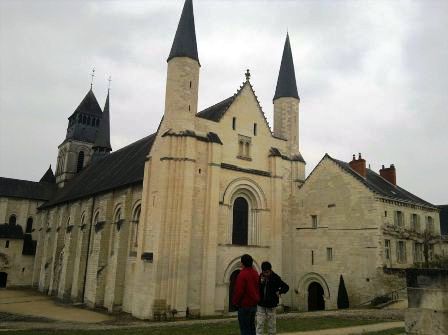
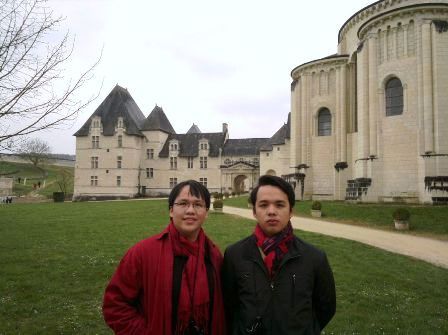
In front of the Abbey's Church...
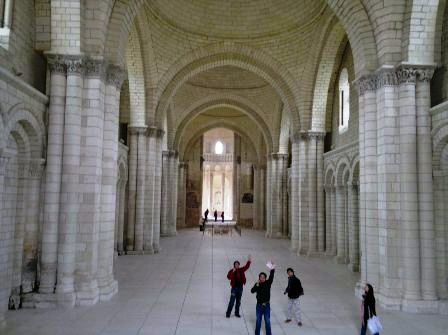
...now inside.
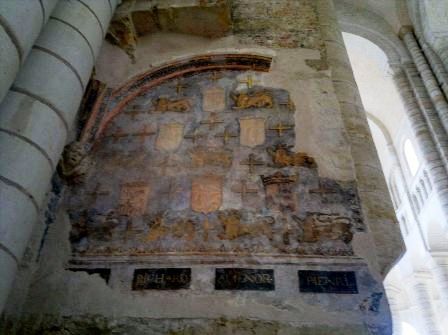
Who are entombed here?
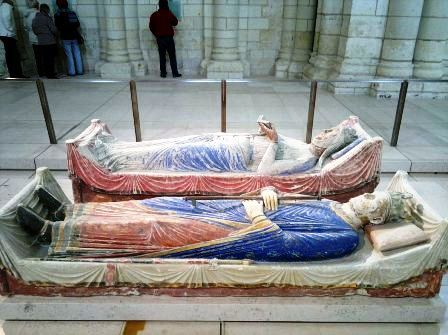
King Henry II & Eleonor of Aquitaine...
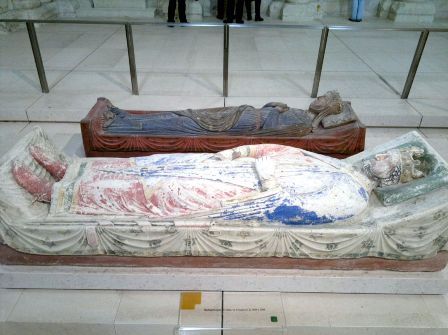
Richard Coeur de Lion (a.k.a., "Richard the Lion Heart"; a.k.a., Richard I*) & Isabella d'Angoulême (wife of King John, Richard I's brother)
* Though Richard the Lion Heart became king of England, he was French. He didn't even speak English.
Founded in 1101 by Breton priest Robert d'Abrissel as a monastery, the abbey in its present state was built in 1105-1160 by rich and powerful benefactors such as the Bishop of Poitiers and the Counts of Anjou, among them, King Henri II (Plantagenet) and his wife, Queen Eleonor of Aquitaine.
The abbey was unique in medieval times in both men and women were included in the one community (albeit housed autonomously from each other), ruled by an abbess, with d'Abrissel as the abbey's Magister. Seized during the French Revolution, the abbey was closed and declared national property in 1789; the order abolished in 1792, and the monk's priory, St-Jean-de-l'Habit, destroyed the year after. Napoleon I, in 1804, used the abbey structure as a prison, and it continued to be used as such until as late as 1963. That year, the prison was closed down, and, massive restoration efforts began and continued until the present l'Abbaye de Fontevraud was opened to the public in 1985.
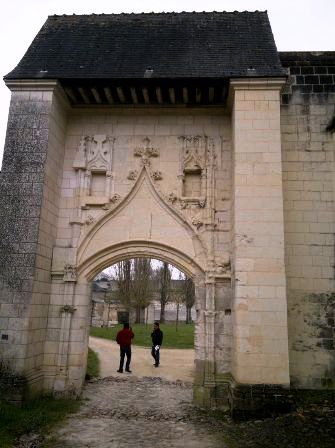
Entering La Madeleine, the lay-sisters' priory.
No lay-sisters there, boys; so off we go, back to Tours.