The place for all things wine, focused on serious wine discussions.

WTN: Isn't this Grünhaus really a Spätlese?

Moderators: Jenise, Robin Garr, David M. Bueker

no avatar
User

Tim York

Rank

Wine guru

Posts

4979

Joined

Tue May 09, 2006 2:48 pm

Location

near Lisieux, France

WTN: Isn't this Grünhaus really a Spätlese?

by Tim York » Sun Jan 29, 2012 12:33 pm

Maximin Grünhäuser Herrenberg Riesling Kabinett - 23 - 2005 - C. von Schubert - Alc.10%.
Trout was on the menu last night and, in spite of some RS, I find that Ruwer Kabinett is usually a fine pairing for it because of its quite light and crisp elegance. So I was surprised by this wine's quite deep yellow, burnished sugary touches on the nose and the richness of the first mouthful. Having got over my surprise, I started to appreciate its aromas of white fruit, including a lot of peach, and petrol tinged minerals, its elegant shape on the palate though fuller than usual, and its mouth-watering acidity, which though less crisp than often was more than sufficient to allow it to work well with the trout and with the Crottin de Chavignol goat cheese which followed. A lovely wine now with plenty of potential for long life and increasing complexity; 16.5/20+++.
Tim York
no avatar
User

Bob Parsons Alberta

Rank

aka Doris

Posts

10904

Joined

Tue Mar 21, 2006 3:09 pm

Re: WTN: Isn't this Grünhaus really a Spätlese?

by Bob Parsons Alberta » Sun Jan 29, 2012 12:51 pm

Good question Tim and one that has been asked here before! This is a big concern for me when on my visits to DeVines I try to handsell some German wines..especially now that we have a whole bunch of new arrivals. Trying to steer punters towards the German section, the usual response is that "the wines taste too sweet". Aagh well, we move on after a brief explanation from me.
I do not know what the answer is, perhaps the experts here will chip in?
no avatar
User

Brian Gilp

Rank

Wine guru

Posts

1440

Joined

Tue May 23, 2006 5:50 pm

Re: WTN: Isn't this Grünhaus really a Spätlese?

by Brian Gilp » Sun Jan 29, 2012 1:17 pm

I thought kabinett only dictated the minimum sugar level of the must and therefore wines that would qualify as Spatlese could be sold as Kabinett if the producer wanted.
no avatar
User

Bob Parsons Alberta

Rank

aka Doris

Posts

10904

Joined

Tue Mar 21, 2006 3:09 pm

Re: WTN: Isn't this Grünhaus really a Spätlese?

by Bob Parsons Alberta » Sun Jan 29, 2012 1:27 pm

Maybe but try explaining that to customers!
no avatar
User

Tim York

Rank

Wine guru

Posts

4979

Joined

Tue May 09, 2006 2:48 pm

Location

near Lisieux, France

Re: WTN: Isn't this Grünhaus really a Spätlese?

by Tim York » Sun Jan 29, 2012 1:36 pm

Brian Gilp wrote:I thought kabinett only dictated the minimum sugar level of the must and therefore wines that would qualify as Spatlese could be sold as Kabinett if the producer wanted.


That's true but not helpful to the consumer, particularly in rich years when there is too much of higher categories and not enough of the supposedly more food friendly Kabinett. Many producers therefore yield to the temptation of "downgrading" their Spätlesen and higher. If they get away with it commercially, it must show that a lot of people are drinking labels. I'm a bit surprised to find von Schubert doing it :o .
Tim York
no avatar
User

David M. Bueker

Rank

Childless Cat Dad

Posts

36371

Joined

Thu Mar 23, 2006 11:52 am

Location

Connecticut

Re: WTN: Isn't this Grünhaus really a Spätlese?

by David M. Bueker » Sun Jan 29, 2012 2:06 pm

A few points:

1. The oeschle requirements for kabinett are laughably low in order to ensure that the plonk producers can label their wines as kabinett.

2. The warming trend has hit Germany, and the wines are significantly riper than they used to be. Often a good producer will harvest nothing below the auslese must weight requriements.

3. There is a market need for kabinett, so the only way to get it in years like 2003, 2005, 2007, 2009 even 2010 (and I hear tell 2011) is to "declassify" a spatlese or higher must to kabinett.

It's affecting everyone. Producers such as Prum, Grunhaus, Donnhoff, Weil and Egon Muller are not exceptions to the situaiton.
Decisions are made by those who show up
no avatar
User

Tim York

Rank

Wine guru

Posts

4979

Joined

Tue May 09, 2006 2:48 pm

Location

near Lisieux, France

Re: WTN: Isn't this Grünhaus really a Spätlese?

by Tim York » Sun Jan 29, 2012 4:26 pm

David M. Bueker wrote:A few points:

3. There is a market need for kabinett, so the only way to get it in years like 2003, 2005, 2007, 2009 even 2010 (and I hear tell 2011) is to "declassify" a spatlese or higher must to kabinett.

It's affecting everyone. Producers such as Prum, Grunhaus, Donnhoff, Weil and Egon Muller are not exceptions to the situaiton.


In other words, people are drinking labels in years like that when there is little difference between "kabinett" and "spätlese", even "auslese".
Tim York
no avatar
User

David M. Bueker

Rank

Childless Cat Dad

Posts

36371

Joined

Thu Mar 23, 2006 11:52 am

Location

Connecticut

Re: WTN: Isn't this Grünhaus really a Spätlese?

by David M. Bueker » Sun Jan 29, 2012 4:30 pm

Tim York wrote:
David M. Bueker wrote:A few points:

3. There is a market need for kabinett, so the only way to get it in years like 2003, 2005, 2007, 2009 even 2010 (and I hear tell 2011) is to "declassify" a spatlese or higher must to kabinett.

It's affecting everyone. Producers such as Prum, Grunhaus, Donnhoff, Weil and Egon Muller are not exceptions to the situaiton.


In other words, people are drinking labels in years like that when there is little difference between "kabinett" and "spätlese", even "auslese".


People drink labels. I would suggest getting over it. There actually is often still a huge difference between the kabinett and especially the auslese. You see the auslese has likely qualified for BA or even TBA, it just wasn't sold that way, as there is zero way to sell multiple fuders of TBA without destroying the cachet of the pradikat.
Decisions are made by those who show up
no avatar
User

Rahsaan

Rank

Wild and Crazy Guy

Posts

9802

Joined

Tue Mar 28, 2006 8:20 pm

Location

New York, NY

Re: WTN: Isn't this Grünhaus really a Spätlese?

by Rahsaan » Sun Jan 29, 2012 4:33 pm

David M. Bueker wrote:There actually is often still a huge difference between the kabinett and especially the auslese.


Yes. From my perspective, these terms are now to be used for making comparisons within vintages. But they are much less helpful across vintages!
no avatar
User

David M. Bueker

Rank

Childless Cat Dad

Posts

36371

Joined

Thu Mar 23, 2006 11:52 am

Location

Connecticut

Re: WTN: Isn't this Grünhaus really a Spätlese?

by David M. Bueker » Sun Jan 29, 2012 4:45 pm

Rahsaan wrote:
David M. Bueker wrote:There actually is often still a huge difference between the kabinett and especially the auslese.


Yes. From my perspective, these terms are now to be used for making comparisons within vintages. But they are much less helpful across vintages!


True, but what do you propose to do about it? Would you have producers release 2,500 cases of auslese and the commercial results be damned?
Decisions are made by those who show up
no avatar
User

Rahsaan

Rank

Wild and Crazy Guy

Posts

9802

Joined

Tue Mar 28, 2006 8:20 pm

Location

New York, NY

Re: WTN: Isn't this Grünhaus really a Spätlese?

by Rahsaan » Sun Jan 29, 2012 4:57 pm

David M. Bueker wrote:
Rahsaan wrote:
David M. Bueker wrote:There actually is often still a huge difference between the kabinett and especially the auslese.


Yes. From my perspective, these terms are now to be used for making comparisons within vintages. But they are much less helpful across vintages!


True, but what do you propose to do about it? Would you have producers release 2,500 cases of auslese and the commercial results be damned?


I don't propose to do anything but drink the wines. I don't have a problem with the terms.
no avatar
User

Tim York

Rank

Wine guru

Posts

4979

Joined

Tue May 09, 2006 2:48 pm

Location

near Lisieux, France

Re: WTN: Isn't this Grünhaus really a Spätlese?

by Tim York » Sun Jan 29, 2012 5:05 pm

So the way the producers want the consumer should look at it is "I'm getting an Auslese for the price of a Kabinett?? But what do I do if I want an old-fashioned Kabinett? I have to have enough knowledge and a sufficiently well stocked cellar to be able to take out a 2001, 2002, 2004 or 2008 or a suitable older vintage.

No wonder Bob has difficulty in interesting the customers at DeVines in German wines when one has to be quite a connoisseur to know what one is getting in any particular vintage.

Perhaps the VdP people have it right after all.
Tim York
no avatar
User

David M. Bueker

Rank

Childless Cat Dad

Posts

36371

Joined

Thu Mar 23, 2006 11:52 am

Location

Connecticut

Re: WTN: Isn't this Grünhaus really a Spätlese?

by David M. Bueker » Mon Jan 30, 2012 3:24 am

Tim York wrote:So the way the producers want the consumer should look at it is "I'm getting an Auslese for the price of a Kabinett?? But what do I do if I want an old-fashioned Kabinett? I have to have enough knowledge and a sufficiently well stocked cellar to be able to take out a 2001, 2002, 2004 or 2008 or a suitable older vintage.

No wonder Bob has difficulty in interesting the customers at DeVines in German wines when one has to be quite a connoisseur to know what one is getting in any particular vintage.

Perhaps the VdP people have it right after all.


I'm still stuck on the question of what should the producers do instead of what they are doing now? When we are talking about a historical estate such as Grunhaus, with fairly rigid "rules" about what they release, there is not much room for change. I think they could resort to a Brudersberg Kabinett, and leave the Herrenberg and Abstberg for top dry wines, spatlese, auslese, etc., but I don't expect them to do that.

With other estates, there have been land acquisitions and repurposing of "lesser" vineyards to provide something closer to actual kabinett style. That's not always an option, but it can work.

As for the VDP, they have it right is some limited ways. A real vineyard classification could be helpful to consumers, though it then drives trophy chases and relegates delicious wines to second class status because they don't have the grand cru attached to them. As far as kabinett goes they are not even addressing your problem. They would likely prefer that the entire genre of kabinett go away, as it is an inconvenient issue for them (the export market that wants a relatively simple, off-dry to sweet wine...blech...why won't they drink dry Riesling the way any God fearing person should... :wink: ). The VDP is busy trying to convince the world that the top sites in Germany are best suited for dry wines, and while some inroads have been made outside of Germany, it's mostly among the hard core fans.

Kabinett - the most distinctive and immediately food friendly wine in the German playbook - is going away, and consumers and producers will be poorer for that.
Decisions are made by those who show up
no avatar
User

Tim York

Rank

Wine guru

Posts

4979

Joined

Tue May 09, 2006 2:48 pm

Location

near Lisieux, France

Re: WTN: Isn't this Grünhaus really a Spätlese?

by Tim York » Mon Jan 30, 2012 6:55 am

David M. Bueker wrote:
I'm still stuck on the question of what should the producers do instead of what they are doing now? When we are talking about a historical estate such as Grunhaus, with fairly rigid "rules" about what they release, there is not much room for change. I think they could resort to a Brudersberg Kabinett, and leave the Herrenberg and Abstberg for top dry wines, spatlese, auslese, etc., but I don't expect them to do that.

With other estates, there have been land acquisitions and repurposing of "lesser" vineyards to provide something closer to actual kabinett style. That's not always an option, but it can work.

As for the VDP, they have it right is some limited ways. A real vineyard classification could be helpful to consumers, though it then drives trophy chases and relegates delicious wines to second class status because they don't have the grand cru attached to them. As far as kabinett goes they are not even addressing your problem. They would likely prefer that the entire genre of kabinett go away, as it is an inconvenient issue for them (the export market that wants a relatively simple, off-dry to sweet wine...blech...why won't they drink dry Riesling the way any God fearing person should... :wink: ). The VDP is busy trying to convince the world that the top sites in Germany are best suited for dry wines, and while some inroads have been made outside of Germany, it's mostly among the hard core fans.

Kabinett - the most distinctive and immediately food friendly wine in the German playbook - is going away, and consumers and producers will be poorer for that.

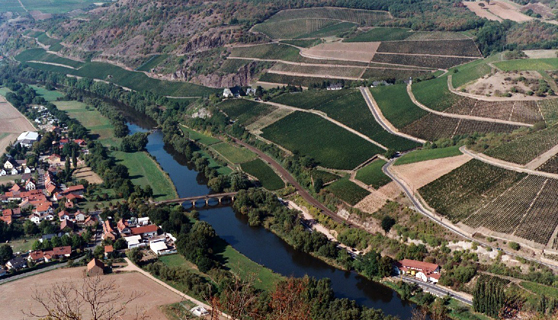
David, thanks for that exposition of the problem. Unless producers adopt an approach such as you suggest for Grünhaus in your first paragraph, we will be stuck with a sweetwards drift in people's understanding of the term "Kabinett" and the virtual disappearance of the real thing. This is paralleled elsewhere in the sweetwards drift of the term "dry". I deplore the degrading of such descriptors and wish that the EU definitions, over liberal though they are, could be made mandatory.
Tim York
no avatar
User

David M. Bueker

Rank

Childless Cat Dad

Posts

36371

Joined

Thu Mar 23, 2006 11:52 am

Location

Connecticut

Re: WTN: Isn't this Grünhaus really a Spätlese?

by David M. Bueker » Mon Jan 30, 2012 7:25 am

I'm not so sure that you could apply the EU rules in a way that would help anyone. Wouldn't all non-trocken pradikatswein end up classified as "sweet" with no upper limits on sugar & thus no additional help to the consumer? Or do I miss your meaning?
Decisions are made by those who show up
no avatar
User

Tim York

Rank

Wine guru

Posts

4979

Joined

Tue May 09, 2006 2:48 pm

Location

near Lisieux, France

Re: WTN: Isn't this Grünhaus really a Spätlese?

by Tim York » Mon Jan 30, 2012 7:50 am

David M. Bueker wrote:I'm not so sure that you could apply the EU rules in a way that would help anyone. Wouldn't all non-trocken pradikatswein end up classified as "sweet" with no upper limits on sugar & thus no additional help to the consumer? Or do I miss your meaning?


The EU defines "dry", "medium dry" and "medium-sweet" and "sweet", the French equivalents of which are "sec", "demi-sec", "moelleux" and "doux". The following is extracted from Wikipedia -

Dry : up to 4g/l RS or up to 9g/l RS if balanced by acidity 2g/l below the sugar level
Medium-dry: up to 12g/l RS or up to 18g/l RS if balanced by acidity 10g/l below sugar level
Medium-sweet: up to 45g/l RS
Sweet: More than 45g/l RS

My guess is that a lot of true Kabinett would be in the medium-dry category and most Spätlese in the medium-sweet.

Incidentally Noël Pinguet of Huet told me that some of his Vouvray "sec" has 12g/l RS. IMO it usually tastes subjectively dry because of the bracing acidity.
Tim York
no avatar
User

David M. Bueker

Rank

Childless Cat Dad

Posts

36371

Joined

Thu Mar 23, 2006 11:52 am

Location

Connecticut

Re: WTN: Isn't this Grünhaus really a Spätlese?

by David M. Bueker » Mon Jan 30, 2012 8:37 am

Tim York wrote:The EU defines "dry", "medium dry" and "medium-sweet" and "sweet", the French equivalents of which are "sec", "demi-sec", "moelleux" and "doux". The following is extracted from Wikipedia -

Dry : up to 4g/l RS or up to 9g/l RS if balanced by acidity 2g/l below the sugar level
Medium-dry: up to 12g/l RS or up to 18g/l RS if balanced by acidity 10g/l below sugar level
Medium-sweet: up to 45g/l RS
Sweet: More than 45g/l RS

My guess is that a lot of true Kabinett would be in the medium-dry category and most Spätlese in the medium-sweet.


"Dry" correlates well to the German "trocken."
"Medium-dry" correlates well to "Halbtrocken."
There is the quasi-legal and very loosely defined "feinherb" which takes in quite a few wines that would be in the "medium-sweet" category, mostly in the lower part of the allowance (i.e. 25 g/l and lower).
Most modern kabinett (and I am going back into the late '90s here) is at least 25 g/l of RS, and often lots more.

Terry Theise used to print a lot of analytical data in his catalog. He does not do so much anymore, but I glanced around and found a great number of kabinetts with 45+ g/l of RS, many of which I own, and many of which are not too sweet. Looking through the 2001 & 2002 vintage catalogs I saw kabinetts with stated RS of 22, 24, 29, 36, 40, 39, 45 & 50 (!) g/l of residual sugar, so it runs the whole range.
Decisions are made by those who show up

Who is online

Users browsing this forum: AhrefsBot, Amazonbot, ClaudeBot, FB-extagent, Google Adsense [Bot], SemrushBot and 8 guests

Powered by phpBB ® | phpBB3 Style by KomiDesign