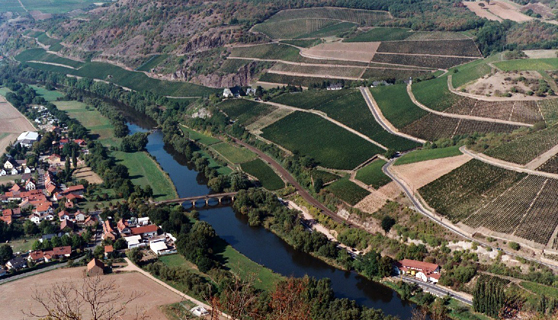
Bill Hooper wrote:As for the GGs costing more money…
We can use Müller-Catoir as an example.
The ‘village-level’ Haardt Riesling is 10€
The ‘Terroir-level’ Haardter Bürgergarten is 16€
The ‘GG’ Breumel in den Mauern from the Haardter Bürgergarten is 24€
In years when a Riesling Auslese is produced from The Breumel parcel it costs 16€ for 375ml (more expensive than the dry wines)
I don’t think that these 6 or 8€ price increases are significant given the noticeably higher increase in quality as one goes up the ladder.
I’ve heard it argued that people are now paying twice as much for the same Spätlese Trocken that they used to buy before GG labeling came along. It is simply not the same wine. It is often the case that a producer will employ a completely different, more labor intensive, and lower-yielding trellising system for GG designated wines. Dry, healthy, ripe, botrytis-free wines also require a lot more vineyard work than Sweeter wines which are more forgiving of defects like botrytis (not to mention that wines with significant botrytis require many more enzyme and chemical additions in the winery.) If a winery happens to be organic, or works without chemical fertilizers, the amount of vineyard work required for producing clean, dry wines in Germany is enormous (Far more than a comparable wine from France, Spain, or Italy.)
Personally, I don’t think that 32€ (which is on the high-side for GG Riesling in Germany) is too much to pay.
It sounds to me that what people are really upset about is the exchange rate. Rebholz or Dönnhoff or Müller-Catoir has nothing to do with that, nor does the VDP for inventing Großes Gewächs.
Just throwing this out in terms of pricing (at least in my neck of the woods here)...
Catoir 'Breumel in den Mauern' GG - $60-70 here
Donnhoff Dellchen/Hermannshohle GG - $55-60, higher in the last couple of vintages
Schafer-Frohlich Felseneck GG - $70-80, same for Schonleber's top GGs
Rebholz Im Sonnenschein GG - $80
Keller Hubacker/Kirchspiel GG - $65
Hirtzberger Hochrain Smaragd - $65 for the '09
Prager Klaus - $55 (60 for Achleiten and Bodenstein)
Hirsch Heiligenstein/Gaisberg - $40-45
Nikolaihof Steiner Hund - $60
Alzinger Steinertal - $55-60
Brundlmayer Lyra - $45
FX Steinertal - $60
The exchange rate is not the issue. Both the top German and Austrian wines are bought with the same weak dollar, are made in very similar styles, and with a few exceptions (Donnhoff Hermannshohle and Rebholz Kastanienbusch) I've found the Austrians superior, am more comfortable aging them and usually consider them better value. I have no problems with GGs and drink them consistently, but with the exception of a few top wines that I think are worth it, I'm not spending on them - particularly not with a few cases of Prager, Hirtzberger and Alzinger to enjoy at better prices.