
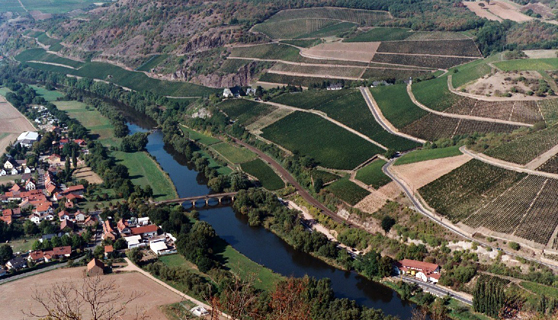

Domaine Pierre Gaillard, Malleval, Rhone-Alpes
March 28, 2011
The domaine is located near the city of Malleval, which is one of the prettiest medieval villages in the region. I attempted to capture as much notes as I can from Jeanne Gaillard, the very knowledgeable and accommodating daughter of Pierre, but even when English was never her first language, she provided us with keen understanding of some of the more important elements in their wine-making processes.
The following wines, all whites, were tasted from the barrel. All fermentation occurred in the barrels wherein they make use of some sort of refrigerated cooling rods, inserted in the openings of the barrels, and which keeps the temperature constant. For the Saint-Joseph blanc, they allow for 6 months of barrel aging; whereas the Condrieu were kept slightly longer where the lees regularly integrated through periodic stirring. All whites use all French barrels, of which 10% are new.
2010 Gaillard Saint-Joseph Blanc (regular parcel)
This is made from Roussanne sourced from the cool-weather slopes and plateaus of Malleval. Showed as clear and clean in appearance, with lushness and purity from fruit, and notes of mineral. Medium bodied and very refreshing and appealing to the taste. From young 7-year old vines. B+
2010 Gaillard Saint-Joseph Blanc (from another parcel)
This barrel was from another lot or parcel and which displayed a very cloudy appearance. Also, 100% made of Roussanne, this wine showed more depth and complexity than the already very good previously-tasted roussanne. This wine was slightly richer with more mineral components. Lime and layers of fine white fruit, somewhat more indicative of the granite-based geography and terroir of the growing environment. Excellent. A-
2010 Gaiillard Condrieu (regular parcel)
Malleval is just a few kilometers south of the white-wine hub of Condrieu. The slopes are also mostly granite, but not as solid as the ones at Malleval. This wine is from 100% Viogner. Compared to the Saint-Joseph, the aromatics of this and the ensuing Condrieu were more expressive with floral, wood and agricultural land components. This wine displayed more lushness, with pineapple notes and good high level of acidity. Long finish. B+
2010 Gaillard Condrieu (from another parcel)
From much older vines than the previous barrel, this showed the smoother and elegant structure, with a very appealing complex bouquet. Full-bodied with very good balance and silky mouth-feel. A-
2010 Gaillard Condrieu Special Cuvee (Organic)
Much more mineral and showing delineated peach and other white fruit component. Although the previous wines were dry, this tasted to be the driest. B
Jeanne then took us to the tasting room, with the trapezoidal table in the middle that was fitted with sinks on each sides that are used to spit-out the wines into. There were about 10 different bottles of reds available for us to taste, but given that there were 2 other winery appointments to go through for the rest of the day and both will involve considerable driving (shared between the wife and I), and since this tasting appointment occurred at 10 a.m., I chose to try only a few.
2009 Gaillard Crozes-Hermitage
This wine was made with wine-making efforts by both Pierre and Jeanne. Very young and aromatic with floral, mocha and ripe black fruit on the nose. Soft tannin, herbs, sweet fruit, and some baking spices. B
2007 Cuilleron-Gaillard-Villard “Asiaticus” Seyssuel
A collaborative effort with 2 other well-respected wine personalities in the Cote-Rotie, the grapes were grown in Seyssuel, an area just north of the Cote-Rotie. This very deep-purple colored wine was aromatic, but more on the fruity side with hints of fresh blueberry pies. Full-bodied with layers of copious ripe black and blue fruit. B
2009 Gaillard Cote-Rotie
100% Syrah. With the earthy, floral and bacon bouquet, this wine was a silky, more feminine sensation, but compact in its structure. Savory, peppery, but still showed pure lean level of black fruit that suggest intermediate cellar-aging is needed to enhance the overall drinking experience. I like it. B+ (with potential to get better with age).
Domaine Jean-Paul & Jean-Luc Jamet, Ampuis, Rhone-Alpes
March 28, 2011
Off of a side side-street of the main “National” highway of the town of Ampuis, the domaine sits up on a hill, about 4 kilometers from the main town overlooking a great vista of the Cote Rotie that hugs this part of the Rhone River. Corrine Jamet, wife of Jean-Paul, enthusiastically came out to meet us as we parked by the doorway to the main tasting room. She apologized for the rainy weather that will prevent us from making a trek to the vineyards, and which actually made us feel relieved knowing that we will not have to venture out to the steep and rugged slopes that day.
2009 Jamet Cotes-du-Rhone Blanc
Poured from an un-labeled bottle, the grapes are sourced from various vineyards in the Ampuis areas of the Cote-Rotie. Containing Roussanne, Marsanne and Viognier, the mineral-laden wine displayed plenty of m=poser with a green bite near the finish. Good length. B
2009 Jamet Cotes-du-Rhone Rouge
The wine spent 1 year in the old barrique. It displayed the perfumed nose that I associate with Cote-Rotie. Strawberries, high acidity and fresh-tasting with an impressive balance and structure. 100% old oak. An impressive CdR that made me wish for local availability. B+
2009 Jamet Cote-Rotie ‘Fructus Voluptas’
A special bottling whose grapes were sourced from only 4 parcels in the Cote-Rotie. The grapes were completely de-stemmed and aged in old barrique. Smooth, easy and approachable. This wine combines silkiness and the power of a fine Cote-Rotie. Corrine then added that just like most of their regular C-R, they expect the wine to close at about the 5th year and which will re-open at about after the 10th from bottling. A-
2008 Jamet Cote-Rotie
The regular bottling comprising of grapes sourced from 25 different parcels within the appellation. With 3 years in the barrique, this tannic wine showed power amidst elegant structure and finesse. Corrine commented that this reminded them of their 1996 vintage and that this one will require patience, at least 15 years, to show its best. Even at this point, I was truly impressed with this wine. A-
The third winery appointment for the day was to be with Thierry Allemand in Cornas. This was about a 50-minute drive from Ampuis. But because I felt slightly ill towards the afternoon, I called to cancel our appointment and rested in our hotel instead.