
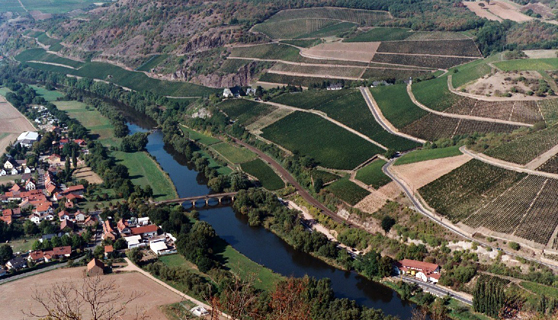

I’m a Bordeaux man, but an open-minded one. So, for the second year in a row I spent a week in the Côte d’Or doing my best to understand the intricacies of that region. Bottom line: the white wines are very fine indeed and some of the reds are surprisingly good too!
I had the good fortune to be taken in tow by an Australian importer, and we visited 21 domaines. This is no mean feat considering that each one pours several wines (up to 15), and it can be freezing cold in their underground cellars!
Although vintages I tasted ranged from 2010 to 1972, the one most on show was 2009, and winegrowers are well-aware that this has received huge media attention. However, several told us that this was an atypical vintage and one they did not think would age particularly well. 2005 was felt to be better and much praise was also lavished on the 2008s as being more “truly Burgundian”.
The intimacy of visits in Burgundy is very stimulating. People take the time to pour many wines, patiently answer questions (frequently with humor), and are glad to explain their point of view on everything to do with viticulture and winemaking.
The Côte d’Or is a beautiful region, whose only drawback is its tininess. This makes for the fascinating, but also frustrating fragmentation of vineyards (and vineyards within vineyards…), although I’m sure this all becomes much clearer to the people who live there or go there often.
Food is great in Burgundy and good, not necessarily expensive restaurants abound. I think I’ll go back next year…
I tasted a great number of wines, but it would be mind-numbing to dutifully record everything. So, here’s the short version, commune by commune.
Any notes that follow that do not specifically say so are of wines from the 2009 vintage.
------------------------------------------------------------------------------------------------------------------------------
Morey Saint Denis
Domaine Gérard Raphet: Gérard took over from his Dad (to whom he sadly no longer speaks) in the middle of the past decade and renamed the domaine. He’s a reliable producer whose grands crus are reasonably priced and pretty good. My favorite was Clos de Vougeot (Clos de la Roche, Clos de Bèze, and Charmes Chambertin weren’t too bad either…)
Domaine Jean Raphet: 75 year-old Jean loves opening bottles left and right. Not surprisingly, his wines are in a more old-fashioned style than his son’s. I like his 1990 Charmes Chambertin best.
Domaine Arlaud: This modern winery is on the other side of the Route Nationale. The young winemaker, Cyprien Arlaud, is very positive and go-ahead. He cultivates his vines organically, and his sister plows them with a horse. The wines were good, but not in a style I do not find it easy to relate to. The one I liked most was Bonnes Mares.
Frédéric Magnien: This is both a négociant and a domaine. We tried the 2010 négociant wines. This was actually a mistake because it’s too early even for professionals to evaluate. This is not a flashy producer and the cellars are very basic, but he does good work and I bought some of his wines (grand crus) last time around.
Domaine Hubert Lignier: There’s a sad story behind this. One of Hubert’s sons died several years after marrying an American lady. His widow insisted on keeping the vines she and her children inherited, in effect breaking up the family vineyard holdings (she named the new domaine Lucie et Auguste Lignier after her children) that Hubert had worked so beautifully for many years.
Hubert and his son Laurent rebounded and continue to make good wine, separately.
Their production of white wine is limited, but their St. Romain and Fixin were very good indeed.
I enjoyed their red wines too, particularly the Charmes Chambertin and Clos de la Roche.
Gevrey Chambertin
Doamine Drouhin-Laroze: This estate has had a so-so reputation in the past, but I found their wines to be good value for money. They have 12 hectares of vines including a bunch of grands crus. We tasted through several wines, also including some by daughter Caroline who started her own domaine which is confusingly called Larose de Drouhin (but then Burgundy wouldn’t be Burgundy if they didn’t test us that way, would it?). Caroline’s Charmes Chambertin (not from the Mazoyères part) is pretty impressive, as is her father’s Clos de Bèze. We had the 2007 and 2006 Bonnes Mares at lunch and preferred the former.
Domaine Alain Bruguet: The Vosne Romanée premier cru Les Rouges and the Clos de Bèze were very nice here, but I also came away with a case of a wine called Les Favorites because I found it to have an excellent quality-price ratio. We tasted their new Meursault which was of the rich and oaky variety, but still very nice.
Domaine Pierre Damoy: Damoy is the largest landholder in Chambertin and Clos de Bèze and many leading producers buy grapes from him. As we often heard during our visit, there are some family frictions at play here… It is sometimes said that others make better wine from his grapes than he does. I certainly don’t know enough to say one way or the other. However, I much enjoyed the wines I tasted from barrel, particularly the Clos de Bèze. He makes a special cuvée of this that is available only in small quantities years after the vintage.
Chambolle Musigny
Domaine Jacques-Frédéric Mugnier: This was perhaps the most trendy estate we visited. The house and offices roughly correspond to the Burgundian version of a château. Frédéric Mugnier is a very serious man who knows what he’s doing and makes beautiful wine from prime terroirs. I probably appreciated his range more than any other growers on the trip. The Clos de la Maréchale was excellent and as was the Bonnes Mares and Les Amoureuses. The latter are more expensive than the former. Many people feel it should be a grand cru. Perhaps so, but I’m tempted to think it’s so pricey because of the name…
We tasted through the 2008s too. I clearly liked the Clos de la Maréchale less (tasted that day – could change, obviously), but the Musigny was right up there.
The 2009 Musigny was perhaps the best wine from that vintage I tasted all week.
Vosne Romanée
Domaine Anne Gros: Anne had just got back from Japan (beating the earthquake by 2 days) and was tired, therefore we were showed around by Elodie.
Anne and her husband have an estate in the Minervois, so we dutifully tasted through their range. I’m not convinced that Vosne Romanée is the place to do this, but what the heck…
As usual, the Burgundies were quite well made, and I gave high marks to the Clos de Vougeot and especially the Richebourg. Anne Gros is a first-class winemaker and her top wines are among the best in Burgundy in my opinion.
Domaine Bruno Clavelier: This is not my style of Burgundy, but my friends (Burg geeks) really love it. Bruno Clavelier is in love with his terroir, which he cultivates organically. And he never stops smiling! The style is a bit like Lafarge - I appreciated the purity and fresh acidity underlying the fruit, but left disappointed.
Domaine Hudelot-Noëllat: Young Charles Van Canneyt took over management of this estate from his grandfather and seems very much up to the challenge. I really likes his Nuits St. Georges premier cru Les Murgets and his Clos de Vougeot, some of which I brought back home with me (from the 2008 vintage).
Domaine Lamarche: This is a women’s affair at present. Nicole makes the wine and does a good job. She is not a people person, so her cousin Nathalie looks after visitors (and sales). We tasted the wines in the family abode, and the temperature was higher than it should have been. This may explain the showing of some of the 2009s, which were nevertheless demonstrably good. I particularly liked the Grands Echézeaux and La Grande Rue. Nevertheless, La Grand Rue in 2008 and 2009 did not impress me as much as I had hoped they would.
Nuits Saint Georges
Domaine Robert Chevillon: I’ve long enjoyed this producer’s wines. We tasted through all his Nuits Saint Georges premier crus, and I especially liked Les Pruliers, Les Roncières, and Les Cailles. The Italian guy who now writes for the Wine Advocate had preceded us by half an hour. Bertrand Chevillon was very critical of his tasting method (precipitous).
Apparently, the process whereby Les Saint Georges would be promoted to grand cru is "in progress", but this is all very subtle and there are lots of interests at play here....
Marsannay
Domaine Bruno Clair: I first met the winemaker, Philippe Brun, in California many years ago… We tasted a slew of wines with Philippe and Bruno and the level was consistently good at every level. For me to give a score of 14/20 to a Savigny-lès-Beaune Les Diamodes is high praise indeed. The Gevrey-Chambertin premier cru Les Cazetiers was also excellent in both 2009 and 2008, while the Clos St. Jacques, Bonne Mares and, especially, the Clos de Bèze were among the best wines I tasted all week. Bruno Clair has 22 hectares of vines and does good work. He is famous for his 3 colors of Marsannay, and I appreciated all of them, particularly the red.
Volnay
Domaine Lafarge: Lafarge is much loved by Burgundy aficionados and it’s not hard to see why. The place is steeped in tradition and the Lafarge family is very kind and welcoming. I liked the wines (giving good notes to the Clos des Chênes and Les Caillerets), but I found they lacked structure and oomph, for want of a better word. I believe that dyed-in-the-wool Burgundy lovers will probably disagree with me here. In other words, I appreciated the wines’ purity, but would have wished for more color, richness, and breadth.
My Burgundy-loving friends tell me: color means very little in the Côte d’Or. This may be so, but it tends to influence me nevertheless.
We tasted a Clos des Ducs 2002 which was quite enjoyable.
Jean-Marc Bouley: Small producer of good, if not exciting wines. The one I liked best was his Clos Des Chênes.
Domaine Boillot: We tasted through a huge number of wines here with young Guillaume Boillot. They have large vineyard holdings, but are also négociants. The whites were just lovely up to and including Criots Bâtard Montrachet, Bâtard Montrachet, Le Montrachet, and Corton Charlemagne. A true delight. I ended up buying a bottle of their lovely “monopole”, Puligny Montrachet premier cru Clos de la Mouchère. The reds were quite different. They were more deeply colored than any other wines we tasted all week (as said above, this is not at all displeasing, just different!), and the taste was very much affected by oak ageing. I will be interested to see how they age… The one that seemed best-balanced, with the most-integrated oak was the Clos de Vougeot.
Chassagne Montrachet
Domaine Bernard Moreau: Located on the outskirts of Chassagne, this producer makes very good red and white wines. They own vineyards in several premiers crus in their commune (I liked the Ruchottes best) and make… one barrel of Bâtard Montrachet from grapes they buy. They also buy their red wine grapes, and do good things with them. I particularly appreciated their Volnay Caillerets.
Jean-Marc Pillot: I see Jean-Marc every time I go to Burgundy and we had a tasting session, but also an aperitif-drinking session at his cellar. While none of his wines reach the heights, they are fruity and well made, and represent superb value for money.
Best regards,
Alex R.

 .
.