The place for all things wine, focused on serious wine discussions.

Visit to Côte Rôtie (long)

Moderators: Jenise, Robin Garr, David M. Bueker

no avatar
User

AlexR

Rank

Wine guru

Posts

806

Joined

Fri Mar 31, 2006 9:28 am

Location

Bordeaux

Visit to Côte Rôtie (long)

by AlexR » Wed Jan 26, 2011 5:08 am

I visited Côte Rôtie for the first time in decades this past weekend and had a wonderful time.

The occasion was the Marché aux Vins in Ampuis, which I first heard about on Internet wine forums and finally decided to visit: http://www.marche-aux-vins-ampuis-cote- ... l#principe

I arrived the day before in Lyon. After a long drive (6 hours), I thought I would reward myself with a glass of Beaujolais. Well, I had to go to 5 cafés before I could find one that would serve me a glass! The waiter in one of these, the up-market Café des Négociants, sniffed and told me that I’d do better with a Côtes du Rhône. Jeez, if the people of Lyon don’t even support their own wine…
For information, the glass I finally found was quite enjoyable.
Dinner was with a friend at Le Musée http://www.linternaute.com/restaurant/r ... usee.shtml, a real bouchon Lyonnais with plenty of atmosphere, solid cuisine, and good Beaujolais (we had their Brouilly and Morgon).

Ampuis, located less than 30 km. from Lyon, is in the Rhône department – same as Beaujolais. It can be a little confusing because I stayed next to a town called Loire-sur-Rhône (!), and Château Grillet is actually in the Loire department, which, when you think about it, is kind of strange for a Rhône Valley wine…

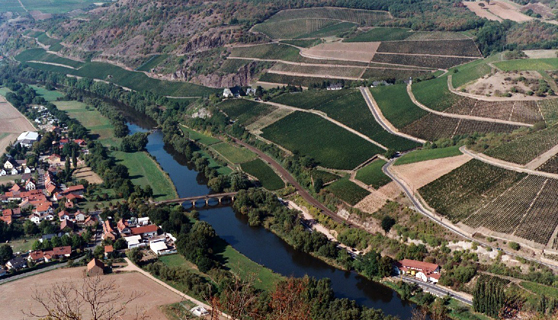
Côte Rôtie is 250 hectares of terraced vines with stakes, on a steep, lumpy hill overlooking the town. Wine has been made here for over two millennia. Syrah is king, although producers add a little Viognier (up to 15% when I asked around).

I learned that “Côte Brune” and “Côte Blonde” are, in fact, misnomers, and are used primarily to simplify things for consumers. There are indeed two plots with those names, divided by a stream called the Reynard. However, at one point in time, plots north of the stream began to be called Côte Brune and ones south Côte Blonde, even if this does not correspond to the reality of the appellation’s 17 different terroirs.

Condrieu now has more vines than Côte Rôtie. About half of producers at the Marché aux Vins were also pouring their Condrieu. I tasted many wines, but I unfortunately just do not like the Viognier grape. I nevertheless did my best to dissociate my personal preference from the wine’s intrinsic quality. Thus, I gave a high score (16/20), for instance, to Guigal’s La Doriane whereas I would never buy a bottle. Several producers were showing vins de paille and vendanges tardives wines. I quite enjoyed Pierre Gaillard’s 2009 late harvest, but this was 34 euros for a tiny bottle. Although I appreciated the other white wines at the tasting (St. Joseph, Hermitage, etc.) better, please forgive me, white Rhône wines just don’t ring my chimes.

The 83rd Marché aux Vins was held in the Ampuis gymnasium and most local producers were there (although not all were from Côte Rôtie and Condrieu, and included people who made – sometimes exclusively – Cornas, St. Joseph, Crozes Hermitage and Hermitage). It cost 8 euros to get in, and they gave you a souvenir glass. This highly-reputed event attracts many people. So many, in fact, that, you can hardly move along the aisles at the height of the weekend, much less taste and spit. Therefore, I would advise anyone who is thinking of attending to arrive on the first day (starting on Friday afternoon at 4 pm) and to be there when the place opens on Saturday and/or Sunday. The crush of people in the afternoon is oppressive. Monday is set aside for professionals, although I was told that that too is crowded…

Prices: Côte Rôtie retail prices start at 25 euros. Indeed, you can find good wine at that price (such as Didier Gérin’s 2009) and seriously good wine in the 30 to 35 euro range. As you can easily imagine, Guigal were not pouring their LaLa’s for the general public! However, they were serving 2007 Château d’Ampuis, whose quality tempted me to buy two bottles at 60 euros each. This was one of the most expensive wines I saw anywhere at the Marché.

I came away with a very good impression of the general quality of Côte Rôtie, especially in the 2009 vintage, which was in bottle and available at about half of the stands. At the risk of raising a few hackles, I cannot help but compare the wines from this appellation to Châteauneuf-du-Pape, and finding the former much more elegant and digestible. Many of the wines had a lovely bouquet and a tangy finish, a sort of acid lift at the end that makes them ideal (dare I say it?) food wines. I also came away with the impression (confirmed by several producers) that these are wines for mid-term ageing, which makes them all the more attractive. Ten years is fine according to the people I spoke to.
The négociant wines were uneven. Guigal’s basic wines were ho-hum, as were Chapoutier’s and Vidal Fleury’s (didn’t get to taste at Delas). However, we all know that Guigal’s estate wines can be superb, and Vidal Fleury’s single estate La Chatillonne was very fine indeed.

I spent two full half-days tasting, and I think it would be both hard work and pretty boring to transcribe all my notes... So, I’ll just share a few impressions instead.

Gilles Barge: The owner is mayor of Ampuis. I liked his 2008 Côte Brune, but was less enamored of this other wines.

Billon: Their 06 Les Elotins was already tired and their 06 La Brocarde (at 39 euros…) was better, but not by much.

Bracoud: Middle-of-the-road producer. Aromatic 2007, but a bit astringent on the aftertaste.

Bonnefond(s): There are two producers of this name. G. Bonnefond makes lackluster wines, but P & C Bonnefond made wine that I very much enjoyed. The 2008 Côte Rosier is lovely and very representative of its appellation. The Colline de Couzo (regular cuvée) is excellent, and will also be good to drink relatively young. A fellow taster found too much oak, but not me.

Bonsérine: They do a number of cuvées. The entry level ones are nothing to write home about, but the best (and fairly expensive) are worthwhile. I preferred 07 La Viallière to the overoaked 07 La Garde, despite the former’s somewhat hot finish.

Burgaud: One of the best at the tasting with a fine bouquet reminiscent of violets.

Chambeyron-Manin: At first, I was very taken with their 2007, but when I re-tasted it, the notes of oxidation seemed more bothersome

Clusel Roch: These people are into organic viticulture. I quite liked their 2007 Côte Rôtie and preferred it to their single vineyard 2008 Les Grandes Places that was weak on the middle palate and dry on the finish.

Coursodon: This is “the” name in St. Joseph, but I only tried their white wine, which was good but not memorable. Should have gone back and tasted their reds, but there’s only so much you can do :-).

Cuilleron: Their range was definitely above average, but I found nothing really special. On the other hand, I had a Saint-Joseph of theirs in a restaurant that was on a par with most of the Côte Rôties I tasted.

Daubrie: Their 07 Côte Rôtie didn’t stand out at all.

Deboisseyt-Chol: One the expensive side (34€). The 2008 a good bouquet, but is spoiled by greenness.

Duclaux: Disappointed with their 07 La Germine, but more impressed with the same wine from the 2008 vintage, which nevertheless does not need long ageing.

Faurie: The 2009 was better on the sniff than in the mouth. Dry finish.

Faury: Their 2009 is a real crowd-pleaser, very buxom and upfront. Sensual. Contains up to 15% Viognier.

Fayolle: Their 09 Hermitage is lovely. I bought 3 bottles at 32 euros each.

André François: Not on par with the best.
Gallet: below average.

Gangloff: Their 08 La Barbarine was nice, but not worth 35 euros.

Garon: The range was a bit uneven, and oak may play too predominant a role. The 09 La Sybarine was a little disappointing, Les Triottes was better, despite the vintage (08), and Les Rochins was quite fine, although expensive (53 €).

Gérard: simple, just OK.

Didier Gérin: Didier looks kind of like an overgrown hippie. He makes very good, affordable wine.

J.M. Gérin: Well-known producer. I quite liked the 08 St. Joseph and the 08 Côte Rôtie which showed good potential. I have a bottle of their Grandes Places in my cellar, but this was not on show.

Jamet: This is a name I have often heard in the past. Their 2009 was rich and concentrated with almost liqueur-like aromas. Strong, and a little hot on the aftertaste. Needs to come together.
I had their 2005 in a nearby restaurant and thought it superb, and at 5 years this was not infanticide, as it would be for a Bordeaux or Burgundy.

Jasmin: another famous name, but I was moderately disappointed with their 2008 (OK, not such a good year as 2009)

Lafoy: Young, go-ahead winemaker. Their 2009 vieilles vignes was very good, their 2006 Les Moutonnes less so.

Levet: Their wines were reliable, especially the 07 La Péroline, but they are not for the long haul.

Lézin-Lagnier: one of the least expensive. Good if consumed young.

Michelas: A good, very virile and tannic 2009 Cornas. Their Terres d’Arce from selected vineyards in the same appellation was even better. Their St. Joseph, on the other hand, was less good.

Mouton: run-of-the-mill in the context.

Ch. de Montlys: This was one of my favorite estates and they even have a genuine château! Really delicious wine to drink in the medium term. Their prestige cuvee, Fleur de Montlys, is even better, but it costs twice as much and I’m not sure it’s worth it.

Niero: While the regular 2009 cuvée is best bypassed, the 2007 Vires de Serin was very fine and subtle (40 euros).

Ogier: This domaine is not to be confused with the much larger Ogier in Châteauneuf-du-Pape. It was the only estate I actually visited. They make a range of Vins de Pays called “La Rosine” sold at very high prices. Are they worth it? As good as they are, I’m not convinced… The 2008 Côte Rôtie, on the other hand, was very good indeed and the only wine I tasted all weekend that evoked the descriptor “bacon fat” that one often reads on American forums.

Parpette: Very good 09 at a very competitive price (23 €).

Pichon: The 2009 seemed to have a problem with barrel ageing. The 2008 Comtesse Côte Blanche was much better, but should be drunk in the next 2-3 years.

Domaine de Rosiers (Louis Drevon): Whereas the 2008 was disappointing the 2009 was delicious. A little on the light side but full of classy fruit and floral aromas. I bought 3 bottles at 25 euros apiece.

D. & R. Vernay: If their 2007 is anything to go by, best avoided.

Voge: Wasn’t impressed with their 2008 Cornas, but the 2007 Vieilles Vignes was much better. My notes say “pour amateurs de sensations fortes”. A wine with cojones.

Best regards,
Alex R.
no avatar
User

R Cabrera

Rank

Wine guru

Posts

654

Joined

Wed Oct 25, 2006 9:14 pm

Location

NYC

Re: Visit to Côte Rôtie (long)

by R Cabrera » Wed Jan 26, 2011 10:56 am

Thanks for the nice report, Alex. As I read, it made me feel like I was there with you. Lot’s of names there that I’ve never come upon over here. I’m book-marking this for reference as the wife may be planning to drag me (kicking and screaming … yeah sure) to the Rhone Valley early this year.

Ramon
Ramon Cabrera
no avatar
User

Bill Spohn

Rank

He put the 'bar' in 'barrister'

Posts

11162

Joined

Tue Mar 21, 2006 7:31 pm

Location

Vancouver BC

Re: Visit to Côte Rôtie (long)

by Bill Spohn » Wed Jan 26, 2011 11:39 am

AlexR wrote: My notes say “pour amateurs de sensations fortes”. A wine with cojones.


In other words it should have enough impact to awaken the jaded palates of the wine writers and get good scores!

I like that phrase! Thanks for the great notes. Too bad you missed the Coursedon reds, I've always enjoyed them.
no avatar
User

Shaji M

Rank

Wine guru

Posts

669

Joined

Thu Apr 05, 2007 3:24 pm

Re: Visit to Côte Rôtie (long)

by Shaji M » Wed Jan 26, 2011 12:12 pm

Great notes Alex. Funny that you had trouble finding Beaujolais in Lyon. I would have imagined that all bistros would serve that in the obligatory carafe. I have fond memories of a great meal we had at a Bouchon several years ago served with some nice Beaujolais. Were any of the caveaus poring their stuff? Some of them can be hit or miss but good values.
no avatar
User

Rahsaan

Rank

Wild and Crazy Guy

Posts

9800

Joined

Tue Mar 28, 2006 8:20 pm

Location

New York, NY

Re: Visit to Côte Rôtie (long)

by Rahsaan » Wed Jan 26, 2011 12:48 pm

Sounds like fun. I've always wanted to go.

Just recently on Disorder we were lamenting the lack of interesting Cote Rotie imported to the States. It seems like there is more action in Cornas. Not sure how your tasting bares out the sub-regional comparisons, but obviously you had more to choose from. And nice that you were not drinking Bordeaux!
no avatar
User

AlexR

Rank

Wine guru

Posts

806

Joined

Fri Mar 31, 2006 9:28 am

Location

Bordeaux

Re: Visit to Côte Rôtie (long)

by AlexR » Wed Jan 26, 2011 12:51 pm

Hmmm. To talk about Beaujolais, rather than Côte Rôtie, I lived in Lyon for a year in the... 1970s.
At that time, Beaujolais was the "vin de comptoir" - a cheap, fruity, fun wine that was available in all the local bars and restaurants.

But things have changed markedly.
It has become trendy to criticize Beaujolais, even in France and, sadly, much of the criticism is deserved, despite the injustice this does to the reliable producers.

The encroachment of Côtes du Rhône in Lyon started not due to any quality problems, but to price increases for Beaujolais.
Later on, overproduction, the falling out of favor of Beaujolais Nouveau, and the great deal of media attention that was given to chaptalization scandals kind of sealed Beaujolais' fate - in the medium term.
In short, Beaujolais' *image* has suffered in France as well as abroad.
It is a crying shame that this should be the same even in its region of orgin.

I would like to think that Beaujolais will have a renaissance one day.
A cynic would say that the current situation will result in a shake-out that will equate supply with demand and weed out the poorest producers.
However, I'm not at all convinced that things work like that (nor that they should, to be honest).

Meanwhile, I am a huge fan of Beaujolais, both the fresh, fruity, uncomplicated, quaffing variety, and the serious cru Beaujolais.

All the best,
Alex
no avatar
User

Mark Lipton

Rank

Oenochemist

Posts

4726

Joined

Wed Mar 22, 2006 1:18 pm

Location

Indiana

Re: Visit to Côte Rôtie (long)

by Mark Lipton » Wed Jan 26, 2011 2:05 pm

AlexR wrote:I visited Côte Rôtie for the first time in decades this past weekend and had a wonderful time.

The occasion was the Marché aux Vins in Ampuis, which I first heard about on Internet wine forums and finally decided to visit: http://www.marche-aux-vins-ampuis-cote- ... l#principe


Many thanks for this lengthy and informative report, Alex. A few comments follow.


Bonnefond(s): There are two producers of this name. G. Bonnefond makes lackluster wines, but P & C Bonnefond made wine that I very much enjoyed. The 2008 Côte Rosier is lovely and very representative of its appellation. The Colline de Couzo (regular cuvée) is excellent, and will also be good to drink relatively young. A fellow taster found too much oak, but not me.


Herein lies the rub as regards Côte Rôtie: many of us were introduced to the region with the wines of the "traditionalists." Here in the US it was the wines of Marius Gentaz that Kermit Lynch brought in: old oak, "rustic" yet amazingly perfumed and long lived. To this day, I can't enjoy Syrah that has been raised in significant quantities of new oak, and that presents a major problem (as Rahsaan has alluded to) with present-day practices in Côte Rôtie. It sounds as if you are not burdened with those memories (or that bias) so you can appreciate wines that stylistically I find hard to swallow (literally).

Faurie: The 2009 was better on the sniff than in the mouth. Dry finish.

Faury: Their 2009 is a real crowd-pleaser, very buxom and upfront. Sensual. Contains up to 15% Viognier.


Now these are two modern-day traditionalists. Did you find their wines qualitatively different from many of the others you tried?

Ogier: This domaine is not to be confused with the much larger Ogier in Châteauneuf-du-Pape. It was the only estate I actually visited. They make a range of Vins de Pays called “La Rosine” sold at very high prices. Are they worth it? As good as they are, I’m not convinced… The 2008 Côte Rôtie, on the other hand, was very good indeed and the only wine I tasted all weekend that evoked the descriptor “bacon fat” that one often reads on American forums.


There's a much larger Ogier in C9dP? That's news to me, Alex, which may reflect the different perceptions on different sides of the pond. Stèphane Ogier's operation (and his father's before him), which also includes a negoce arm, is the only one I've seen over here. The La Rosine (VdP des Collines Rhodaniennes) used to be a screamingly good value, available over here for under $10 (in the '80s) and qualitatively as good as many Crozes-Hermitage and St. Josephs. Now, at $30, it's not a "must buy." :(

Voge: Wasn’t impressed with their 2008 Cornas, but the 2007 Vieilles Vignes was much better. My notes say “pour amateurs de sensations fortes”. A wine with cojones.


As a good Cornas should be. That young, they should strip two layers of epidermis out of your mouth. Isn't it fun how different an expression of Syrah it is?

Mark Lipton
no avatar
User

Bill Spohn

Rank

He put the 'bar' in 'barrister'

Posts

11162

Joined

Tue Mar 21, 2006 7:31 pm

Location

Vancouver BC

Re: Visit to Côte Rôtie (long)

by Bill Spohn » Wed Jan 26, 2011 2:11 pm

Mark Lipton wrote:
Voge: Wasn’t impressed with their 2008 Cornas, but the 2007 Vieilles Vignes was much better. My notes say “pour amateurs de sensations fortes”. A wine with cojones.


As a good Cornas should be. That young, they should strip two layers of epidermis out of your mouth. Isn't it fun how different an expression of Syrah it is?

Mark Lipton


Agree - I always figured that a traditional Cornas should require 10 years to snap into focus where the fruit was featured over the tannins. Voge and Clape are faves of mine, and also (although he is new age - go figure) Colombo, who does both older style (in terms of structure) in his Les Ruchets and new age, e.g. Les Mejeans. Drop by some time, Mark, and I'll open one of my few remaining 1991 Les Ruchets!
no avatar
User

Rahsaan

Rank

Wild and Crazy Guy

Posts

9800

Joined

Tue Mar 28, 2006 8:20 pm

Location

New York, NY

Re: Visit to Côte Rôtie (long)

by Rahsaan » Wed Jan 26, 2011 4:04 pm

Mark Lipton wrote:There's a much larger Ogier in C9dP? That's news to me, Alex, which may reflect the different perceptions on different sides of the pond. Stèphane Ogier's operation (and his father's before him), which also includes a negoce arm, is the only one I've seen over here.


I think you might see the other Ogier here in the States. But not in the good wine shops, which probably explains why you're not familiar with it :wink:
no avatar
User

AlexR

Rank

Wine guru

Posts

806

Joined

Fri Mar 31, 2006 9:28 am

Location

Bordeaux

Re: Visit to Côte Rôtie (long)

by AlexR » Wed Jan 26, 2011 5:07 pm

Rahsaan,

With just 250 hectares to meet world demand, it's not surprising that a large proportion of wine from such small growers is not imported into the US.

Mark,

Oak: This was not my first exposure to Côte Rôtie by any means. It was just the first time I had ever had as many all at one time. In other words, I have also enjoyed the old-fashioned wines you speak of. And they still exist. But among them, alas, there are also a number of prematurely old wines, with a browning color and that are going nowhere 2 or 3 years after the vintage. On the whole, I saw no great opposition to "old" and "modern" in this appellation, such as exists in Bordeaux. When I said that a fellow taster thought that the Bonnefond was too oaky, I also mentioned that I disagreed. You imply that you probably would have agreed with the other taster. But I think you would have had to be there :-). Surely the most famous wines of Côte Rôtie are the Guigal LaLas. And yet, they have great lashings of new oak. Once again, not to everybody's taste, I know. But new oak can underscore and highlight the fruit and structure of fine wines, and I don't think that Côte Rôtie is any exception. Obviously, the amount of new oak and length of barrel ageing are of great importance. But I can't see for the life of me why this potentially great wine shouldn't see a certain percentage of new oak. In fact, it is my feeling that several of the wines I tasted would have benefited from such treatment. I am not insensitive to oak overkill, and found it in several wines, the best example being the Bonserine cuvées. However, I would be wary of making an equation such as "new oak = modern and international" / "old oak = authentic and pure". Having said that, Mark, you may have a far better handle on Côte Rôtie than me. There were 61 exhibitors at the Marché. Freshly arrived from Bordeaux, I tasted what I could, and was into discovery mode. I cannot claim to be any sort of expert on the C.R. appellation! All I'd ask you to consider is that the judicious use of new oak, like Bordeaux, can, over time, blend in and complement the wine rather than steamroller it. Honestly, there were several wines that had the oak *and* the lovely violet bouquet. For me, that was the bees knees! Please, above all, believe me when I say that nuance is what counts with oak ageing.

As for the Faure/Faury, I had no idea that there was, to some people (perhaps to many, I don't know) a divide between traditionalists and modernists. I did not approach the tasting from that perspective, so would be hard put to qualify these producers either way.

As for Ogier, they are a big operation in CDP belonging to the Jeanjean group from the Midi http://www.ogier.fr/index-us.html. Primarily négociants, they also own Clos de l'Oratoire des Papes. I visited them a year ago. They have a sort of fake castle in the middle of town.

As for Cornas and St. Joseph, these can be tremendous value when they are good, but that is not what I was looking for. With a couple of hundred wines to taste, I wanted to concentrate on Côte Rôtie. Even so, I was convinced to try wines from these two appellations and came away mostly impressed. The best St. Joseph wines were as good as middling Côte Rôties. Cornas is another kettle of fish altogether. Much more muscle, much less class than C.R. With regard to my cellar, I am looking more for 7-10 year wines, and C.R. fits the bill better from my point of view.

All the best,
Alex R.
no avatar
User

Rahsaan

Rank

Wild and Crazy Guy

Posts

9800

Joined

Tue Mar 28, 2006 8:20 pm

Location

New York, NY

Re: Visit to Côte Rôtie (long)

by Rahsaan » Wed Jan 26, 2011 5:19 pm

AlexR wrote:Rahsaan,

With just 250 hectares to meet world demand, it's not surprising that a large proportion of wine from such small growers is not imported into the US.


Sure. But I think folks like Mark lament the fact that the Cote Rotie that lined the shelves here 15-20 years ago was a very different style to the Cote Rotie that lines the shelves now. Part of this is the general shift in wines, but according to some folks this change has been especially tough in Cote Rotie (planting syrah clones from the Southern Rhone during the 1970s and 80s, expanding the appellation, old domaines being taken over by the new generation who were more likely to embrace modern styles). For various reasons, the same trend has not happened with Cornas.

From our perspective, it is interesting to see what holdouts/countermovements may exist in Cote Rotie. But of course you're much closer to being able to find out!
no avatar
User

Salil

Rank

Franc de Pied

Posts

2705

Joined

Sun Sep 28, 2008 2:26 pm

Location

albany, ny

Re: Visit to Côte Rôtie (long)

by Salil » Wed Jan 26, 2011 6:16 pm

Mark Lipton wrote:Herein lies the rub as regards Côte Rôtie: many of us were introduced to the region with the wines of the "traditionalists." Here in the US it was the wines of Marius Gentaz that Kermit Lynch brought in: old oak, "rustic" yet amazingly perfumed and long lived. To this day, I can't enjoy Syrah that has been raised in significant quantities of new oak, and that presents a major problem (as Rahsaan has alluded to) with present-day practices in Côte Rôtie. It sounds as if you are not burdened with those memories (or that bias) so you can appreciate wines that stylistically I find hard to swallow (literally).

Mark, who's on your shortlist of winemakers in Côte-Rôtie to follow now?

Alex - thanks for the notes. Was Gangloff only pouring his Barbarine? It's a nice enough wine when found at closeout prices, but I agree the normal pricetag is stiff. On the other hand, his La Sereine Noire CR is a stunning wine (though it really needs a few years in bottle).
no avatar
User

Mark Lipton

Rank

Oenochemist

Posts

4726

Joined

Wed Mar 22, 2006 1:18 pm

Location

Indiana

Re: Visit to Côte Rôtie (long)

by Mark Lipton » Wed Jan 26, 2011 6:21 pm

AlexR wrote:Oak: This was not my first exposure to Côte Rôtie by any means. It was just the first time I had ever had as many all at one time. In other words, I have also enjoyed the old-fashioned wines you speak of. And they still exist. But among them, alas, there are also a number of prematurely old wines, with a browning color and that are going nowhere 2 or 3 years after the vintage.


Alex,
Regardless of where one stands on the issue of new oak in Syrah, surely there must be something amiss if a Côte-Rôtie is dying 2-3 years after bottling? Traditionalism does not, a priori, make for good winemaking. Quite to the contrary, to make good wine using traditional methods means that you must work harder than you would using "modern" methods, especially in the vineyards.

When I said that a fellow taster thought that the Bonnefond was too oaky, I also mentioned that I disagreed. You imply that you probably would have agreed with the other taster. But I think you would have had to be there :-).


I agree completely. Knowing nothing really about your tastes or those of your friend, I can't say how closely either would comport with my own. And certainly I've met a few individuals even more quercophobic than I am (Otto comes to mind and maybe Rahsaan, too).

Surely the most famous wines of Côte Rôtie are the Guigal LaLas. And yet, they have great lashings of new oak. Once again, not to everybody's taste, I know. But new oak can underscore and highlight the fruit and structure of fine wines, and I don't think that Côte Rôtie is any exception.


It is true that many think very highly of the LaLas, including any number of prominent critics. Even John Livingstone-Learmonth, my own guru of the N Rhône, gives Guigal's wines high praise. For myself, I've had a few young and a few with age on them; in the former case, I find them unrecognizable as Côte-Rôtie and in the latter I find them recognizably Syrah but of a different sort than I look for in Côte-Rôtie: bigger, denser, more polished and less perfumed. To me, at its best, Côte-Rôtie is the most feminine expression of Syrah and also the most Burgundian in character. Hermitage, to the contrary, is the most masculine and most claret-like. Whatever the LaLas are, feminine and Burgundian they ain't. Rahsaan also alludes to another issue: historically, the grape of Côte-Rôtie was Serine, later determined to be one in the same with Syrah... but is it exactly the same? Practitioners of selection massale would argue (vociferously) otherwise. Those who imported Syrah cuttings from the S. Rhône may have changed the character of the wine they made.

Obviously, the amount of new oak and length of barrel ageing are of great importance. But I can't see for the life of me why this potentially great wine shouldn't see a certain percentage of new oak. In fact, it is my feeling that several of the wines I tasted would have benefited from such treatment. I am not insensitive to oak overkill, and found it in several wines, the best example being the Bonserine cuvées. However, I would be wary of making an equation such as "new oak = modern and international" / "old oak = authentic and pure". Having said that, Mark, you may have a far better handle on Côte Rôtie than me.


New oak and Syrah is a contentious topic, especially on Internet wine boards. :? There is no right or wrong, only stylistic preferences. As a quercophobe, though, I can also claim that the expression of terroir is far easier to discern when there isn't a patina of new oak overlaying it. At the same time, I have great appreciation for many wines that see plenty of new oak in their youth, but they are all vins de garde that I drink with plenty of bottle age (Dujac's Burgundies, e.g., or Ch. Latour)


As for the Faure/Faury, I had no idea that there was, to some people (perhaps to many, I don't know) a divide between traditionalists and modernists. I did not approach the tasting from that perspective, so would be hard put to qualify these producers either way.


Again, this may be more of an issue on Internet wine boards than it is for the vignerons themselves, though at least one (Eric Texier) has strong opinions on the topic. Certainly, though, it has been less of an issue in Ampuis than it has been in Bordeaux and Piemonte.

As for Ogier, they are a big operation in CDP belonging to the Jeanjean group from the Midi http://www.ogier.fr/index-us.html. Primarily négociants, they also own Clos de l'Oratoire des Papes. I visited them a year ago. They have a sort of fake castle in the middle of town.


Aha! I well remember that, on a par with the "museum" of Père Anselme. :lol:

As for Cornas and St. Joseph, these can be tremendous value when they are good, but that is not what I was looking for. With a couple of hundred wines to taste, I wanted to concentrate on Côte Rôtie. Even so, I was convinced to try wines from these two appellations and came away mostly impressed. The best St. Joseph wines were as good as middling Côte Rôties. Cornas is another kettle of fish altogether. Much more muscle, much less class than C.R. With regard to my cellar, I am looking more for 7-10 year wines, and C.R. fits the bill better from my point of view.


Good Cornas can easily age for 7-10 years and often needs far more. Like Gentaz in C-R, Nöel Verset (and August Clape) in Cornas defined my early experiences with Cornas. Their wines are generally best 15-20 years on and can compete with the best from anywhere.

Cheers!
Mark Lipton

All the best,
Alex R.[/quote]
no avatar
User

Paul Winalski

Rank

Wok Wielder

Posts

9287

Joined

Wed Mar 22, 2006 9:16 pm

Location

Merrimack, New Hampshire

Re: Visit to Côte Rôtie (long)

by Paul Winalski » Wed Jan 26, 2011 8:42 pm

Alex,

Thanks for the very comprehensive report on Cote Rotie. Did you get a chance to taste any of the wines from Georges Vernay? He is a well-known Condrieu producer, but until my personal visit in the Rhone valley a decade ago, I hadn't known he also produced excellent Cote Rotie.

Unfortunately, all the wines you describe are, in my geography, either painfully high-priced or unavailable. Ah, well, c'est le vie!

-Paul W.
no avatar
User

Mark Lipton

Rank

Oenochemist

Posts

4726

Joined

Wed Mar 22, 2006 1:18 pm

Location

Indiana

Re: Visit to Côte Rôtie (long)

by Mark Lipton » Thu Jan 27, 2011 1:37 am

Salil wrote:Mark, who's on your shortlist of winemakers in Côte-Rôtie to follow now?


Salil,
Let me preface this by saying that I haven't bought any Côte Rôtie in about 5 years owing to price escalation and a diminishing number of producers I'm interested in. (The same, BTW, holds true in Hermitage, too: between both regions I have only a half dozen or so bottles left) Having said that, Claude Kolm has suggested some names, and I find his tastes in close alignment with my own for Syrah: Faury, Faurie and Burgaud. If Eric Texier still makes a Côte Rôtie, I'd hazard that that's worth trying, too. As much as I love Syrah from the N. Rhône, it's hard to justify paying the equivalent of 3 bottles of the '05 ESJ Bassetti for one bottle of CR or Hermitage.

Mark Lipton

Who is online

Users browsing this forum: ClaudeBot, Rahsaan, Ripe Bot and 6 guests

Powered by phpBB ® | phpBB3 Style by KomiDesign