The place for all things wine, focused on serious wine discussions.

Riesling Aging Question

Moderators: Jenise, Robin Garr, David M. Bueker

no avatar
User

Howie Hart

Rank

The Hart of Buffalo

Posts

6389

Joined

Thu Mar 23, 2006 4:13 pm

Location

Niagara Falls, NY

Riesling Aging Question

by Howie Hart » Fri Jan 21, 2011 10:05 am

I just bottled my 2010 Riesling in two batches. They are the same wine with different amounts of reserved juice added for sweetening. The grapes were harvest at 21 Brix (87.4 öchsle scale), which, depending on where you would be in Germany would be considered either Spätlese or Auslese. I made no adjustments for either sugar or acid.
The first is "Dry" by the IRF Sweetness Scale - .76 TA, .75% sugar, 11.2% abv.
The second is "Medium Sweet" by the IRF Sweetness Scale - .76 TA, 2.3% sugar, 10.5% abv.
I was wondering how these might age and whether one would have better aging potential, say 5-10 years from now. I hope to be able to keep my hands off a case of each for that long.
Chico - Hey! This Bottle is empty!
Groucho - That's because it's dry Champagne.
no avatar
User

David M. Bueker

Rank

Childless Cat Dad

Posts

36367

Joined

Thu Mar 23, 2006 11:52 am

Location

Connecticut

Re: Riesling Aging Question

by David M. Bueker » Fri Jan 21, 2011 12:32 pm

Any predicitons based on the numbers will make a fool of me. I also don't see dry extract info, which would be another number (making me a bigger fool), but I do think it's important.

That being said, I would have equal faith in aging both provided that they show excellent balance. If you think a characteristic is sticking out then I would worry.
Decisions are made by those who show up
no avatar
User

Victorwine

Rank

Wine guru

Posts

2031

Joined

Thu May 18, 2006 9:51 pm

Re: Riesling Aging Question

by Victorwine » Fri Jan 21, 2011 3:49 pm

Hi Howie,
Here’s something interesting to read from “The Sommelier Prep Course: An Introduction to the Wines, Beers, and Spirits of the World” by M Gibson.

http://books.google.com/books?id=vAJAx7 ... &q&f=false

Salute
no avatar
User

Howie Hart

Rank

The Hart of Buffalo

Posts

6389

Joined

Thu Mar 23, 2006 4:13 pm

Location

Niagara Falls, NY

Re: Riesling Aging Question

by Howie Hart » Fri Jan 21, 2011 6:04 pm

Thanks David. The only characteristic I can think of that sticks out is the acidity of 0.76, which is a bit lower than I'm used to (usually above 0.8), but the pH is is 3.18, which is right in the ballpark.
Thanks for that link Victor. Interesting read. Based on the table in the text, which seems to generalize, it seems the sweeter one would have a greater aging potential.
Chico - Hey! This Bottle is empty!
Groucho - That's because it's dry Champagne.
no avatar
User

Ben Rotter

Rank

Ultra geek

Posts

295

Joined

Tue Sep 19, 2006 12:59 pm

Location

Sydney, Australia (currently)

Re: Riesling Aging Question

by Ben Rotter » Sat Jan 22, 2011 2:16 am

As a generalisation for going by numbers, higher residual sugar, lower pH, higher acidity and higher alcohol all tend makes wines last longer. But lasting longer isn't the same as "ageing" in normal wine geek lexicon - "ageing" means the change of (at least) aromatics and palate sensations (tannins/phenolics/etc). There's no rule for the later - it's complicated by many factors. But generally, I'd argue that if the wine hasn't been (overly) "manipulated", and it's balance, then you'll either discover the fruit isn't very good (it loses flavour intensity with age / seems to lose length / it feels out of balance because the fruit dies off so the presently grippy tannins become harsher / the palate gains weight and there's not enough acidity to keep it fresh anymore / etc etc) then you find out after a while. If it's good fruit and it was well handled, then you see it too.

Prior to bottling, I'd say good fruit tends to show superior balance year after year, a superior concentration of flavour, noticable development during elevage, automatically better integration with wood (if relevant)... But these are general "rules" that are by no mean an exhaustive list. Ultimately, you only ever REALLY know by experiencing the wine ageing, because every vineyard and vintage and variety is different, and sometimes there are pleasant surprises.

Howie Hart wrote:21 Brix (87.4 öchsle scale), which, depending on where you would be in Germany would be considered either Spätlese or Auslese


Interesting; I was not aware that the Spätlese/Auslese designation varied from state/regioon to state/region(?).
no avatar
User

Howie Hart

Rank

The Hart of Buffalo

Posts

6389

Joined

Thu Mar 23, 2006 4:13 pm

Location

Niagara Falls, NY

Re: Riesling Aging Question

by Howie Hart » Sat Jan 22, 2011 3:02 am

Ben Rotter wrote:
Howie Hart wrote:21 Brix (87.4 öchsle scale), which, depending on where you would be in Germany would be considered either Spätlese or Auslese


Interesting; I was not aware that the Spätlese/Auslese designation varied from state/regioon to state/region(?).

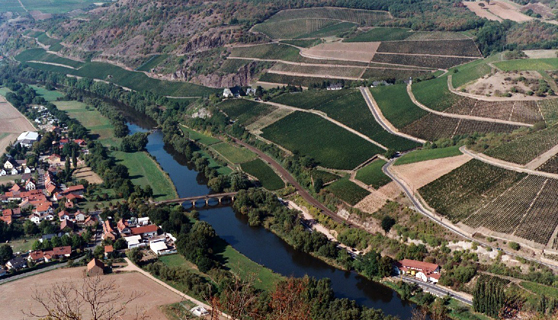
Thanks for the insight Ben. Good perspective. The following is from a post by David Beuker a few years ago, titled "A Primer on the Prädikat system of German Riesling".
Limiting this discussion to Riesling, and the six most famous wine regions of Germany, the minimum öchsle requirements are:

QbA: 51 (approx. 12.6 degrees Brix!!) for the Mosel-Saar-Ruwer and Mittelrhein; 57 for the Nahe and Rheingau; 60 for the Pfalz and Rheinhessen

Kabinett: 70 (approx. 17 degrees Brix) for the Mosel-Saar-Ruwer, Mittelrhein and Nahe; 73 for the Pfalz, Rheingau and Rheinhessen

Spätlese: 76 (approx. 18.4 degrees Brix) for the Mosel-Saar-Ruwer and Mittelrhein; 78 for the Nahe; 85 for the Pfalz, Rheingau and Rheinhessen

Auslese: 83 (approx. 20 degrees Brix) for the Mosel-Saar-Ruwer and Mittelrhein; 85 for the Nahe; 92 for the Pfalz and Rheinhessen; 95 for the Rheingau

Beerenauslese & Eiswein: 110 (approx. 25.8 degrees Brix) for the Mosel-Saar-Ruwer and Mittelrhein; 120 for the Nahe, Pfalz and Rheinhessen; 125 for the Rheingau

Trockenbeerenauslese: 150 (approx. 34 degrees Brix) for ALL SIX REGIONS
Chico - Hey! This Bottle is empty!
Groucho - That's because it's dry Champagne.
no avatar
User

Victorwine

Rank

Wine guru

Posts

2031

Joined

Thu May 18, 2006 9:51 pm

Re: Riesling Aging Question

by Victorwine » Sat Jan 22, 2011 11:54 am

Besides going by “harvest” (or “at crush”) Brix or Oechsle numbers in determining whether or not a wine is “classified” Kabinett, Spatlese or Auslese, one I think should also be concerned with how much of the juice is pulled for “reserve” (“back-sweetening”) prior to fermentation and how “dry” or “complete” the “fermented juice” is allowed to go. This is why distinguishing between these wines becomes so hazy.
Like Ben said longevity and aging do not mean the same thing. But longevity and potential to “cellar-age” go hand in hand. A wine lacking longevity may not “benefit” from “cellar-aging” The “numbers” at least give you “clues” to the possible longevity of the wine. Like Ben said ultimately you would have to “experiment” with “cellar-aging”.

Salute

Who is online

Users browsing this forum: ClaudeBot, FB-extagent, Ripe Bot, SemrushBot and 2 guests

Powered by phpBB ® | phpBB3 Style by KomiDesign