

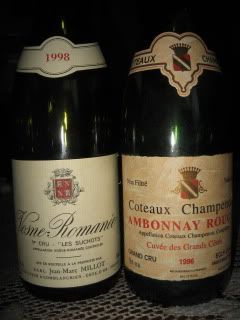
Coteaux Champenois - Ambonnay Rouge - Cuvée des Grands Côtés 1996 – Grand Cru - Egly-Ouriet – Alc. 12%, a still wine made from Pinot Noir old vines and bottled unfiltered. This was a wonderfully elegant and harmonious expression of Pinot Noir and the Champagne terroir. It showed remarkable purity yet complexity of pinot fruit with, in particular, delicious notes of sour cherry, medium/light body, lively acidity, linear shape with great length, gentle structural support for the finish. At the same level as the 1995, with slightly more rigour and class but less sexy charm; 17.5/20++. (BTW, according to Robert Parker, the Champagne region only produces sparkling wine!!!??
 )
)Vosne-Romanée 1er cru Les Suchots 1998 – Jean-Marc Millot – Alc. 13%. Coming straight after the Ambonnay this seemed somewhat pedestrian; in other company it might have shone more brightly. Naturally the body was fuller with more tannic structure and the savoury Pinot fruit was very nice encased in good structure with decent length; from memory the 1997 was more velvety and charming; 15.5/20++. (This Millot estate is little known but used to be imported into the UK by the late La Vigneronne. I always have enjoyed the uncomplicated style and reasonable prices of these wines.)
Alsace Riesling grand cru Schlossberg 1997 “Cuvée du Centenaire 1998” - Domaine Weinbach – Alc. 13.5%. As I was drinking this I was thinking that it was quite Austrian Smaragd in style. Rich and quite complex with secondary flavours of a dark hue, slightly Southern in character, an alcoholic seeming finish (but only 13.5%?!) and only smooth acidity. 1997 was a famously low acid year and I know that the Faller ladies produce much brighter and more elegant results in most vintages. Others at the table liked it more that I did; 16/20 as an average of the opinions.
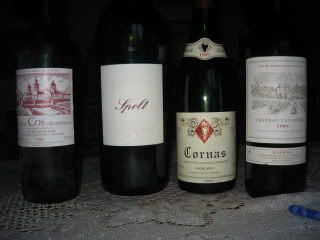
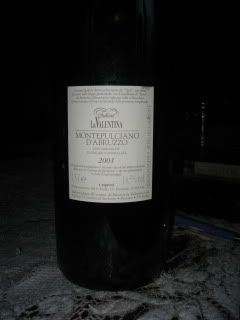
Montepulciano d’Abruzzo Spelt 2001 – Fattoria La Valentina 2001 – Alc.14.5% - from a magnum. A 75cl bottle which I opened about 18 months ago showed strange cheesy notes initially but then opened up attractively as the cheese fell into the background. There was no cheese in this magnum but the nose and palate seemed more backward showing muted dark fruit, tar, lively tangy acidity and a rigour and structure which promise further development to a level comparable with that of fine mature Chianti. The 2000 was already there when I drank my last bottle about two years ago. 16.5/20 with ++ potential
Bandol 1995 – Château Vannières – Alc.13%. A lovely example showing mature strawberry fruit, Provençal herbs, tar and leather with a medium weight body and classical linear shape; 16.5/20+++.
Cornas 1997 – Domaine Clape – Alc.13% - was an elegant Cornas with medium/full body attractive red fruit (griotte cherry), earthy minerals and linear shape. It was less robust, gutsy and rustic than I associate with Cornas, perhaps a combination of the vintage and a refining of style at a time when Pierre Clape was taking over the reins; 16/20++
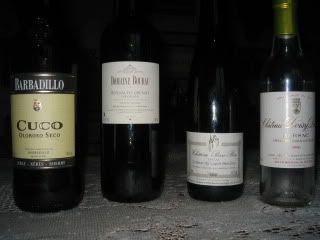
Oloroso Seco Cuco – Barbadillo – Alc. 19% - was full and dark in aroma with lots of complexity and structure which made an excellent match with Stilton but not quite on a par with vintage port. On the second day it was more open with brighter aromas coming out to complement the dark. This is wine style which deserves to be better known; I think that it would do a good job accompanying a robust stew; 16.5/20++.
Coteaux du Layon Beaulieu L’Anclaie 1996 – Château Pierre-Bise, Claude Papin – Alc.13% - was delicious in a quite full style with discrete botrytis blending beautifully with white fruit (apricot and peach), minerals and lively acidity offsetting the considerable sugar; 17/20+.
New Year’s Eve
Gaisböhl 2001 (Ruppertsberger Gaisböhl Riesling trocken Qualitätswein 34) – Weingut Dr. Bürklin-Wolf – Alc.12.5% - was served at cellar temperature (c.11°C) with the traditional cold lobster. In character it was quite similar to the Weinbach Schlossberg noted above – rich in a Smaragd style with dark flavours but perhaps with a touch more primary fruit, livelier acidity but also more sugar than the Weinbach. IMO too rich at cellar temperature and not dry enough for the cold lobster but much livelier, less heavy and more fragrant (and more to my taste) two days later straight from the fridge; 16/20+.
Château Doisy-Daëne Barsac 1996 – Alc.14% was even fuller, sweeter and richer than the above Coteaux du Layon but less to my taste because dominated by botrytis flavours with more muted acidity. It did a good job, though, as convention suggests, with a Roquefort cheese and was adequate with dessert; 16/20.
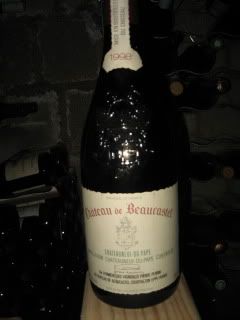
The Cos d'E and Beaucastel are the subject of separate notes.
 .
.