Steve Slatcher wrote:For my test I would be thinking of using competent tasters, but not experts of the region. Their mission would be to identify commonalities in aroma and taste, not to name the vineyard. I seriously don't think they would do better than chance given 20 or fewer wines.
Get a collection of 10 Echezeaux and 10 Savigny-les-Beaune. I'd wager that a panel of competent tasters will do a
lot better than chance in identifying which wines belong to which commune.
I think you keep better tasting company than me, Mark. I have come across no one who can consistently nail a wine down to vineyard/village level, but if the options are sufficiently restricted to an area of expertise I dare say it is possible. Better than chance at getting the region right? Well yes, maybe if the experiment is large enough, but that is hardly a great achievement. Often I think context is the key to success at this game - who is providing the wine, what is the likely quality, etc. "Blind" rarely means wines selected at random from around the world.
Consistency is the question, innit, Steve? Few people have the breadth of experience (and the palate) to succeed in identifying wines on a routine basis, but I'm really talking about something different, which is finding elements of commonality that link wines from a particular place, be that region, commune, vineyard or lieu dit. When people routinely talk about the "iron" found in wines from Musigny, one has to conclude that either there's something in the wines that gives that impression, or that we're suffering from a case of the power of suggestion (most likely, both are applicable).
But it is not just the company I keep. I also know many experienced tasters completely mess up in getting the region right. Remember the udgement of Paris? Remember the Harry Waugh quote? Remember the difficulty experienced tasters have in telling red wine from white even?
But Harry Waugh is also the person who, after a car accident that cost him his sense of smell, correctly identified a particular vintage of Lafite from nothing more than its mouth feel.

It is another question as to whether an above-chance regional identification is due to terrior or not. Largely a question of definition I think. But it is nothing to do with soil, drainage and vineyard aspect, as they vary so much within most regions. Climate and wine-making style, maybe. But if it is due those factors I prefer to use those precise words rather than "terroir". Seems a lot more straightforward.
What underlies the concept of terroir is thorny indeed. A case in point is the area of Côte-Rôtie in the N Rhône. Yes, the grapes grow on a very rocky, steep slope and yes, they are at higher latitude than other Syrah-growing regions, but also the traditional grapes grown there were Serine, which many feel was a particular strain of Syrah that gave rise to more perfumed and mannered wines. Exposure, as you say, varies greatly within Côte-Rôtie, but that's recognized in the different character exhibited by the Côte Brune and the Côte Blonde. Of course, they have different soils, too. It's important to recognize that these distinctions were recognized in many cases by monks in the 13th and 14th Centuries, so weren't colored by modern notions of terroir.
Mark Lipton

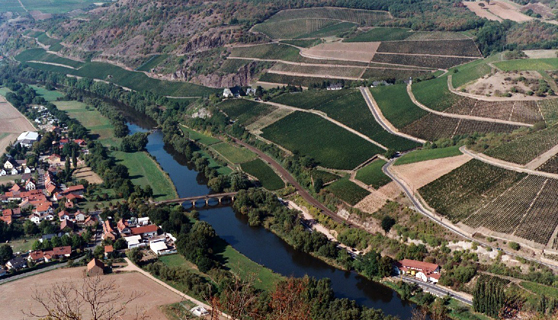


 ) but I thought it is interesting and relevant to this dicussion.